

From Reed Diffuser Manufacturing to OEM/ODM Innovation
Explore China’s role in the global home fragrance supply chain, including reed diffuser manufacturing, fragrance oils, diffuser bases, packaging, and private-label OEM/ODM services.
China has become one of the world’s most important manufacturing bases for home fragrance products. From reed diffusers and scented candles to car air fresheners and room fragrance products, Chinese manufacturers offer an extensive combination of packaging resources, fragrance materials, production capabilities, and OEM/ODM services.
Compared with personal perfume, where France and other European countries retain considerable influence in fine fragrance creation and luxury branding, China’s competitive position in home fragrance is particularly strong in physical manufacturing and supply chain integration.
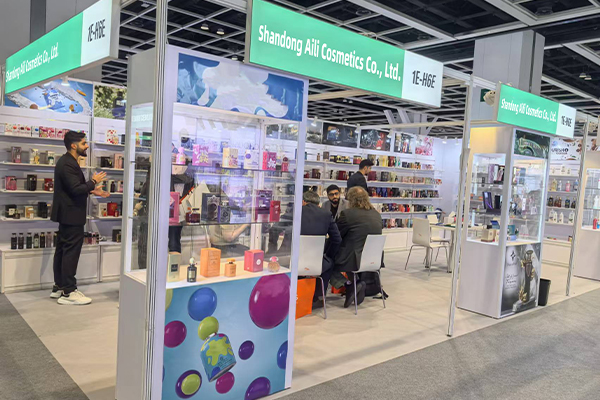
At Shandong Aili Cosmetics Co., Ltd., we see this as an important opportunity for international fragrance businesses. China’s advantage is not simply producing inexpensive reed diffusers. It is the ability to coordinate fragrance development, diffuser bases, containers, accessories, filling, and packaging to support different market segments.
Shandong Aili Cosmetics believes the true essence of a fragrance lies in its scent, its quality, and the emotion it evokes—not the markups defined by brand prestige alone. For too long, high-quality fragrances have been elevated into exclusive luxuries. We view fragrance differently: it is a daily form of self-expression and personal comfort that should be effortlessly accessible to everyone.
Our purpose goes far beyond lower production costs. Leveraging our decades of manufacturing expertise, integrated supply chain, and uncompromised quality control, we bridge the gap between premium fragrance design and everyday affordability. We are not here to challenge luxury, but to elevate value. By delivering uncompromised quality at a true-to-value price, Shandong Aili empowers global partners and consumers to experience the art of fine fragrance as a daily delight, rather than a privileged indulgence.
1. China’s Manufacturing Strength in Reed Diffusers and Home Fragrance
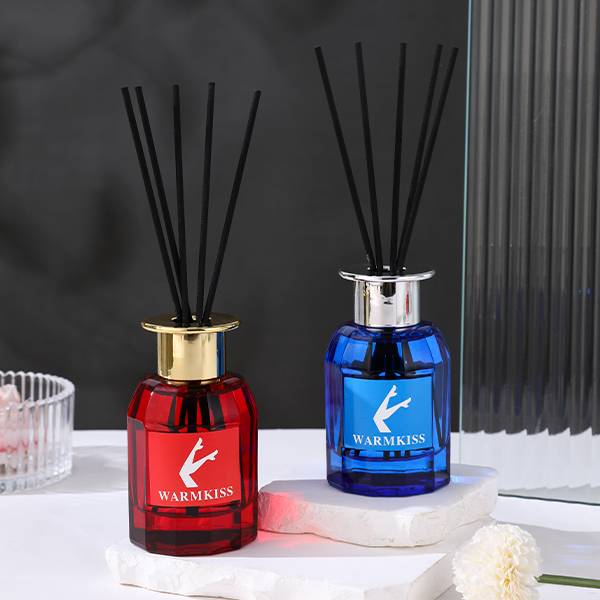
A reed diffuser is a relatively simple product in appearance, but its production involves several interconnected components:
A glass, ceramic, or other suitable container.
Reed sticks or engineered fiber diffuser sticks.
Fragrance oil or fragrance concentrate.
A suitable diffuser base or carrier system.
Labels, packaging, and protective accessories.
China has developed extensive supplier networks for these components, particularly in manufacturing regions such as Guangdong, Zhejiang, Jiangsu, and Shandong.
Glass and ceramic suppliers offer different container shapes, capacities, colors, and surface finishes. Packaging manufacturers provide cartons, gift boxes, labels, and decorative accessories. Specialized suppliers produce natural rattan reeds and engineered fiber sticks in different sizes and structures.
The advantage comes from having many of these resources available within an established industrial ecosystem.
For international buyers, this means more flexibility when developing products for supermarkets, online retailers, gift businesses, hospitality projects, and independent fragrance brands.
China should not be described as the exclusive manufacturing source for the world’s reed diffusers. However, its extensive supplier base and production capacity make it one of the most competitive sourcing destinations for commercial home fragrance products.
2. Diffuser Bases: The Chemistry Behind Consistent Fragrance Diffusion
The performance of a reed diffuser depends on more than the fragrance oil itself. The diffuser base plays an important role in controlling how the liquid moves through the reeds and releases fragrance into the surrounding space.
A suitable base needs to balance several factors:
Fragrance compatibility and solubility.
Viscosity and capillary movement through the reeds.
Evaporation rate and fragrance release.
Stability during storage.
Odor neutrality and finished-product appearance.
Safety and regulatory suitability for the intended application.
Different formulations may use different carrier materials. Examples include glycol ethers such as DPM (dipropylene glycol methyl ether), MMB (3-methoxy-3-methyl-1-butanol), and other specialized diffuser-base ingredients.
These materials are not interchangeable, and their suitability depends on the formulation and intended use. A chemical’s presence in a product does not automatically make the finished diffuser environmentally friendly or harmless. Buyers should evaluate the relevant safety data, exposure considerations, applicable restrictions, and finished-product documentation.
China’s chemical manufacturing industry provides access to a broad range of formulation materials and supporting suppliers. This gives domestic home fragrance manufacturers opportunities to develop different diffuser systems according to product positioning and performance requirements.
At Aili Cosmetics, we believe that a successful reed diffuser must be evaluated as a complete formulation. Fragrance quality, base compatibility, reed performance, and evaporation behavior all influence the final consumer experience.
3. Fragrance Oils: International Expertise and China’s Growing Capabilities
Fragrance is the defining element of home fragrance products. A reed diffuser may have an attractive bottle and elegant packaging, but its commercial success ultimately depends on the scent experience it provides.
International fragrance houses such as Givaudan, dsm-firmenich, IFF, and Symrise have established global fragrance creation and ingredient supply networks. Their expertise contributes to fine fragrance, personal care, household products, and home fragrance applications.
At the same time, China’s domestic fragrance industry is developing capabilities in aroma chemicals, fragrance formulation, ingredient sourcing, and application research.
Chinese home fragrance manufacturers can work with international fragrance suppliers, domestic fragrance companies, and specialized formulation partners. The choice depends on the required scent profile, target price, technical specifications, and market positioning.
Another important trend is the growing interest in fragrance adaptation. Buyers increasingly request scents inspired by nature, seasonal changes, interior design, and particular lifestyle concepts.
However, analyzing a fragrance through GC-MS does not automatically reveal every aspect of its creative formulation or make an exact commercial reproduction possible. Fragrance composition, material availability, sensory evaluation, and intellectual-property considerations all matter.
For long-term brand development, we believe creating a recognizable fragrance identity is more valuable than relying entirely on imitating established products.
4. China’s Competitive Advantage in Home Fragrance OEM/ODM
One of the strongest reasons international buyers source home fragrance products from China is the ability to coordinate multiple production stages.
A manufacturer may need to manage fragrance selection, diffuser-base compatibility, container sourcing, reed selection, filling, sealing, labeling, and retail packaging.
China’s manufacturing ecosystem makes it possible to coordinate these processes through established supplier relationships.
| Product category | Common OEM/ODM opportunities |
| Reed diffusers | Custom scents, bottles, reeds, and packaging |
| Scented candles | Fragrance selection, wax systems, containers, and gift boxes |
| Room sprays | Fragrance development, formulation, and packaging |
| Car fragrances | Compact containers, fragrance systems, and private labeling |
| Home fragrance gift sets | Coordinated scents, accessories, and presentation boxes |
For international businesses, this creates opportunities to develop a complete home fragrance collection rather than sourcing each product from an unrelated supplier.
MOQ and production lead times depend on the product, packaging, formula, and customization level. Existing bottles and established fragrance options generally simplify development, while new molds and original formulations require additional investment and time.
5. From Low-Cost Products to Premium Oriental Home Fragrance
China’s home fragrance industry is not limited to low-priced products.
A growing number of Chinese fragrance brands are exploring distinctive scent concepts based on tea, bamboo, osmanthus, woods, incense, and other cultural or natural inspirations.
Brands such as To Summer (观夏) and DOCUMENTS (闻献) have contributed to greater visibility for contemporary Chinese fragrance aesthetics.
This trend demonstrates that home fragrance is becoming more than a functional household product. It is increasingly connected with interior design, lifestyle, emotional experience, and personal taste.
For international buyers, this creates opportunities to explore differentiated product concepts, including:
Oriental tea-inspired reed diffusers.
Woody and incense-inspired home fragrance.
Floral and botanical room scents.
Minimalist diffuser collections for modern interiors.
Premium home fragrance gift sets.
At Aili Cosmetics, we believe the future of home fragrance manufacturing will involve both efficient production and stronger product identities. Competitive pricing matters, but fragrance quality, packaging design, and consumer experience are equally important to building a sustainable brand.
6. Why Choose Shandong Aili Cosmetics for Home Fragrance OEM/ODM?
Shandong Aili Cosmetics Co., Ltd. has more than 30 years of experience in fragrance manufacturing. Located in Linyi, Shandong Province, China, we have developed a business covering perfume, home fragrance, and selected personal-care and home-care products.
Our product capabilities include reed diffusers and related fragrance products, alongside our established perfume manufacturing operation.
We provide OEM and ODM support for international customers who want to develop their own fragrance collections. Depending on project requirements, cooperation can involve fragrance selection, packaging coordination, product specifications, and finished-product manufacturing.
Our experience in fragrance production helps us understand that different products require different technical considerations. A perfume, a reed diffuser, and a room fragrance product may share fragrance materials, but their formulation systems and performance requirements are not identical.
For reed diffusers, the relationship between fragrance oil, diffuser base, and reeds is particularly important. The finished product should be evaluated for compatibility, stability, evaporation behavior, and the intended fragrance experience.
Our goal is to help customers develop home fragrance products that balance product appeal, manufacturing feasibility, and target-market requirements.
7. What International Buyers Should Consider When Sourcing Reed Diffusers from China
A competitive quotation is only one part of a successful sourcing decision. Buyers should also evaluate the following:
Fragrance performance: Request samples and assess fragrance character, diffusion, and performance under relevant conditions.
Base compatibility: Confirm that the fragrance oil and diffuser base work together and remain stable during storage.
Reed quality: Evaluate absorption, capillary performance, consistency, and suitability for the selected formulation.
Packaging quality: Check bottle sealing, leakage resistance, cap fit, carton protection, and transportation suitability.
Safety and compliance: Review relevant safety data, ingredient restrictions, labeling, and destination-market requirements.
Export arrangements: Confirm packaging, documentation, shipping classification, and transportation requirements for the actual product formulation.
These checks are particularly important for businesses importing home fragrance products into the EU, UK, North America, and other regulated markets.
Frequently Asked Questions
1. Why is China an important manufacturing base for reed diffusers?
China has extensive suppliers of glass containers, ceramic vessels, diffuser reeds, fragrance materials, packaging, and finished-product manufacturing. This industrial ecosystem supports competitive pricing and coordinated OEM/ODM production.
2. Does China manufacture most of the world’s reed diffusers?
China is a major global manufacturing and sourcing base for reed diffusers, but there is no sufficiently reliable universal statistic establishing that it produces more than 80% of global supply. Market share varies by product category and sourcing channel.
3. What is the difference between reed diffuser oil and diffuser base?
Fragrance oil provides the scent, while the diffuser base acts as a carrier that helps transport and release fragrance through the reeds. Some formulations combine fragrance materials and carrier components into a finished diffuser liquid.
4. Which diffuser base is better: DPM or MMB?
Neither is universally better. Their performance depends on fragrance compatibility, viscosity, evaporation behavior, formulation requirements, and applicable safety considerations. Finished-product testing is essential.
5. Can Chinese factories customize reed diffuser bottles and packaging?
Yes. Buyers can often choose from existing glass or ceramic containers and customize labels, colors, caps, reeds, and outer packaging. Custom molds may also be possible depending on budget and order volume.
6. Can a Chinese manufacturer produce premium reed diffusers?
Yes. Premium positioning depends on fragrance quality, formulation, container design, packaging, product consistency, and brand presentation rather than manufacturing location alone.
7. What products can be developed through home fragrance OEM/ODM services?
Common options include reed diffusers, scented candles, room sprays, car fragrances, and coordinated home fragrance gift sets. Available services depend on the manufacturer’s actual production capabilities.
8. Why work with Shandong Aili Cosmetics for reed diffuser manufacturing?
Aili Cosmetics combines more than 30 years of fragrance manufacturing experience with perfume, reed diffuser, and related consumer-product capabilities. We support international buyers seeking OEM/ODM manufacturing and coordinated fragrance product development.
Conclusion: China Is a Key Engine of the Global Home Fragrance Industry
China’s position in the global home fragrance supply chain is built on more than low production costs. Its extensive packaging resources, chemical and fragrance suppliers, diffuser components, and OEM/ODM manufacturing capabilities create a highly integrated sourcing environment.
Compared with personal perfume, home fragrance offers Chinese manufacturers particularly strong opportunities in product customization, component coordination, and large-scale commercial production.
At Shandong Aili Cosmetics, we see the next stage of growth as a combination of manufacturing efficiency, formulation expertise, and differentiated fragrance concepts. By supporting perfume and home fragrance development, we aim to help international partners create products that meet changing consumer expectations and build lasting market value.