Annual Consumption of Iran Perfume Market
How large is Middle East Iran’s perfume fragrance market, and how many bottles are consumed annually? Explore market estimates, import data, local production, fragrance preferences and sourcing opportunities for Chinese perfume fragrance manufacturers and exporters.
How many bottles of perfume does Iran consume each year? It is an important question for international perfume manufacturers, exporters and private label brands considering the Iranian market. However, Iran does not publish a consistently accessible official national statistic for annual perfume consumption measured in bottles or liters. Market research reports, customs records and local production figures use different definitions, making a single nationwide consumption number difficult to verify.
For Chinese perfume manufacturers & suppliers, a more practical approach is to examine the value of the personal fragrance market, reported imports, local manufacturing activity and the product categories purchased by different customer groups.
At Shandong Aili Cosmetics Co.,Ltd., we believe the true essence of a fragrance lies in its scent, its quality, and the emotion it evokes—not the markups defined by brand prestige alone. For too long, high-quality fragrances have been elevated into exclusive luxuries. We view fragrance differently: it is a daily form of self-expression and personal comfort that should be effortlessly accessible to everyone.
1. How Large Is Iran’s Annual Perfume Market?
Iran has a significant fragrance and personal-care market, but it is important to distinguish finished perfumes from the wider fragrance industry.
A 2024 MarketsandMarkets estimate placed Iran’s overall flavors and fragrances market at approximately USD 260.7 million. Within this research model, the fragrance segment was estimated at around USD 190.6 million, including approximately USD 43.3 million for fine fragrances. The broader fragrance figure also covers fragrance applications in consumer products, rather than only bottled personal perfume.
Separately, 6Wresearch projects a 6.5% compound annual growth rate for Iran’s personal perfume market during 2026–2032. This is a market forecast, not a confirmed annual growth rate.
These figures suggest meaningful demand, but they should not be combined or treated as the value of all perfume bottles sold in Iran.
| Market indicator | Reported estimate | Interpretation |
| Overall flavors and fragrances market, 2024 | USD 260.7 million | Includes flavors and fragrance applications |
| Fragrance segment, 2024 | USD 190.6 million | Includes consumer-product fragrance applications |
| Fine fragrances, 2024 | USD 43.3 million | More directly relevant to personal perfume |
| Personal perfume market forecast, 2026–2032 | 6.5% CAGR | Commercial research forecast |
For perfume exporters, the fine-fragrance segment is the most relevant starting point, although it still does not provide a direct count of bottles consumed annually.
2. Why Is Iran’s Annual Perfume Consumption Difficult to Calculate?
There are several reasons why customs figures cannot represent the entire Iranian perfume market.
Local production and filling: Finished perfumes are not the only products entering the supply chain. Fragrance concentrates, solvents, bottles, spray pumps and cartons may be imported separately and assembled or filled locally. These activities are not fully reflected in finished-perfume import statistics.
Different product categories: A 100 ml EDP, a 15 ml perfume oil, a body mist and a concentrated fragrance compound are not equivalent units of consumption. Some trade databases also classify products differently.
Official and indirect trade: Sanctions, foreign-exchange restrictions and regional trading arrangements can affect the routes used by suppliers. Goods may move through intermediaries or regional distribution centers, creating differences between exporter-reported and importer-reported figures.
Changing purchasing power: Currency depreciation, inflation and changes in household spending can influence the mix of mass-market and premium products. Market value can therefore change even when physical consumption does not increase at the same rate.
For these reasons, a precise annual bottle-consumption figure should not be presented as an established national fact without a clearly documented methodology.
3. What Do Iran’s Perfume Import Figures Tell Us?
Customs data provides a useful view of international supply, even though it is not a complete measure of domestic consumption.
According to World Bank WITS data based on UN Comtrade, 2024 exporter-reported records for HS 330300, covering perfumes and toilet waters, included shipments from Oman, Turkey, China and several other countries to Iran.
Among the listed suppliers:
- Oman reported approximately USD 1.61 million in exports to Iran.
- Turkey reported approximately USD 1.15 million.
- China reported approximately USD 834,000.
- Thailand reported approximately USD 644,000.
These figures are useful for identifying active trade relationships, but they should not be interpreted as the complete value of Iran’s perfume imports. Reporting differences, shipment classifications and indirect trade can affect the figures.
For Chinese manufacturers, the data confirms that China is already part of the supply landscape. However, competing successfully requires more than offering a low factory price. Buyers also evaluate fragrance quality, packaging, consistency, documentation and the reliability of the supply arrangement.
4. Which Perfume Products Have Commercial Potential in Iran?
Iran should not be treated as a market with one uniform fragrance preference. Product demand varies by age, income, retail channel and brand positioning.
Several product categories are worth evaluating.
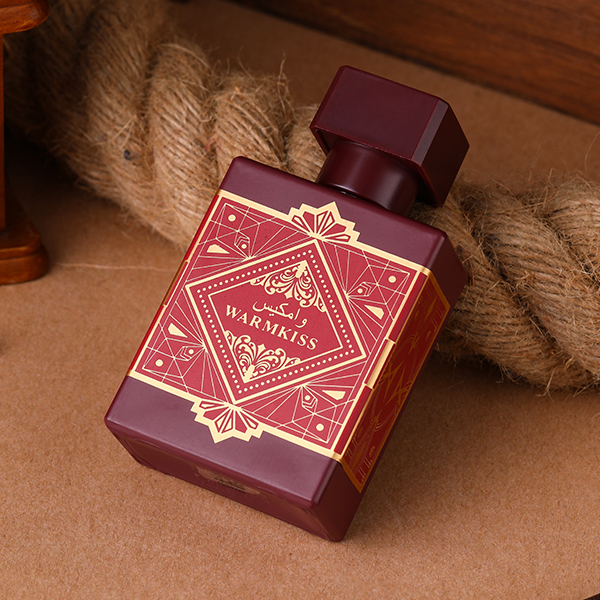
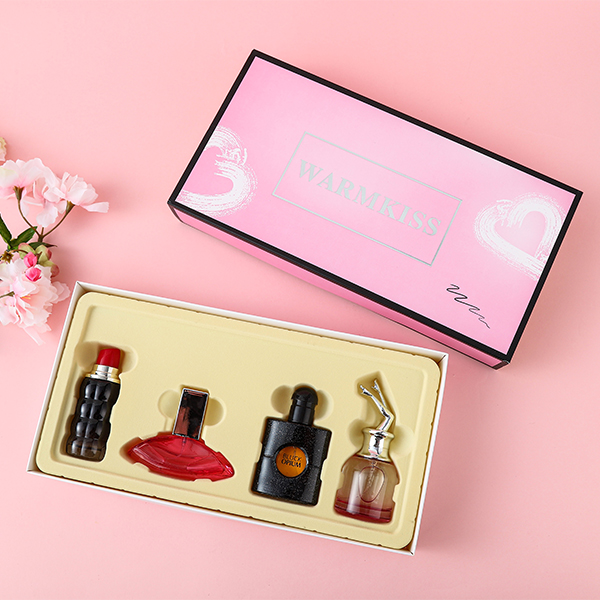
EDP and concentrated spray perfumes: Common retail formats include 30 ml, 50 ml and 100 ml glass bottles. Buyers may consider woody, amber, floral, musky and spicy fragrance profiles, with different intensity levels for everyday use and special occasions.
Perfume oils and concentrated fragrances: Smaller 6 ml, 12 ml and 20 ml glass bottles, including rollerball and applicator formats, can serve customers looking for portable products or concentrated fragrance applications. Formula composition and local product requirements should be confirmed before development.
Mass-market perfumes: These products compete through accessible pricing, recognizable scent profiles and practical packaging. Standard glass bottles, conventional spray pumps and printed folding cartons can help control product costs.
Premium and gift-oriented perfumes: Heavier glass bases, decorative caps, metallic finishes and rigid gift boxes can support higher-positioned products. However, packaging cost should be evaluated against the actual retail channel and target customer.
A manufacturer should test each fragrance and packaging combination rather than assuming that one formula or bottle design will suit every Iranian buyer.
5. What Should Chinese Perfume Manufacturers Consider?
For a Chinese perfume manufacturer, Iran can be approached through several customer types: importers, local perfume brands, wholesalers, distributors and manufacturers that source fragrance concentrates or packaging components.
The most useful initial questions concern the buyer’s actual business model:
- Does the buyer import finished bottled perfume or fill products locally?
- Is the target segment mass-market, mid-range or premium?
- Which bottle capacities and packaging styles are already selling?
- Does the buyer need a stock fragrance, private label product or customized formula?
- Which payment, shipping and import arrangements are legally and practically available?
It is also important to verify the current sanctions, banking, customs and product-registration requirements before accepting an order. A commercially attractive quotation does not guarantee that payment and delivery can be completed smoothly.
6. How Shandong Aili Cosmetics Can Support Fragrance Projects
At Shandong Aili Cosmetics Co., Ltd., we have more than 30 years of cosmetics and fragrance manufacturing experience, with the company established in 1993. Our perfume operations include 48 production lines and a reported daily perfume production capacity exceeding 300,000 bottles.
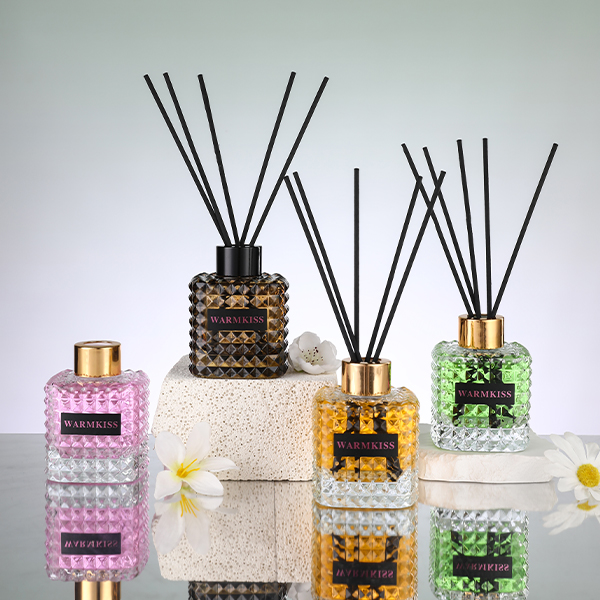
We develop and manufacture fragrance products for different customer requirements, including men’s and women’s perfumes, private label EDP, gift-oriented products and related home-fragrance categories. Our fragrance sourcing resources include Robertet, Givaudan and Symrise, depending on the project and material selection.
For Iranian importers and distributors, we believe product planning should begin with the target retail price, bottle capacity, fragrance direction and packaging specification. A 50 ml everyday perfume and a premium 100 ml gift product require different decisions about formula, bottle weight, pump, cap and carton.
We also recommend confirming the buyer’s import route, payment arrangements, labeling requirements and transport classification before production. This is particularly important for alcohol-based perfumes, which may be subject to dangerous-goods transport requirements depending on the finished product and shipping method.
Frequently Asked Questions
1. How many perfume bottles does Iran consume annually?
There is no sufficiently reliable official national figure for annual perfume consumption in bottles. Local production, imported finished goods and fragrance concentrates make a precise calculation difficult.
2. What is the estimated size of Iran’s perfume market?
Commercial research provides different estimates depending on the scope. Fine fragrances were estimated at approximately USD 43.3 million in 2024 by MarketsandMarkets, while broader fragrance categories were substantially larger.
3. Is Iran a potential market for Chinese perfume manufacturers?
It can be a potential market for manufacturers offering suitable product positioning, competitive packaging and reliable supply arrangements. However, payment, sanctions, customs and logistics risks must be evaluated carefully.
4. Which perfume sizes should exporters consider?
Common formats worth discussing with buyers include 30 ml, 50 ml and 100 ml spray perfumes, as well as smaller perfume oil bottles. Final selection should follow local retail demand and the distributor’s sales model.
5. Does Iran import finished perfume from China?
Yes. World Bank WITS exporter-reported data records Chinese exports of HS 330300 products to Iran in 2024. The figures do not represent all Chinese-origin fragrance trade.
6. Is the Iranian market limited to premium perfumes?
No. Buyers may serve mass-market, mid-range and premium segments. Product selection should reflect customer purchasing power, retail channels and the distributor’s brand strategy.
7. Can Chinese factories develop private label perfumes for Iranian buyers?
Yes. OEM/ODM projects can cover fragrance selection, bottle and cap configuration, filling, labeling and outer packaging, subject to the manufacturer’s capabilities and the buyer’s specifications.
8. What is the biggest risk when exporting perfume to Iran?
Payment and trade-route feasibility are major considerations, alongside customs requirements, product documentation, labeling and dangerous-goods transport classification. These should be confirmed before accepting a production order.
Conclusion
Iran’s annual perfume consumption cannot currently be reduced to one verified national bottle count. Nevertheless, market research estimates, customs records and the presence of local fragrance manufacturing indicate that the country has an established personal fragrance market with different price and product segments.
For Chinese manufacturers, the opportunity should be evaluated through specific buyers and distribution channels rather than an assumed nationwide consumption figure. At Shandong Aili Cosmetics, we see the most practical starting point as understanding the importer’s product positioning, preferred fragrance profiles, packaging requirements and feasible trade arrangements before developing a long-term supply relationship.