Why Is Perfume Export Different from Domestic Sales?
Learn why perfume export requires different approaches to compliance, logistics, fragrance preferences, packaging, pricing, and international trade. See how Shandong Aili Perfume supports global perfume brands with OEM y ODM manufacturing.
Perfume may look like a simple consumer product, but international perfume business is much more complicated than selling fragrance in the domestic market.
For a Chinese perfume manufacturer, the difference is not simply language or shipping distance. Export orders involve different regulations, fragrance preferences, packaging expectations, transportation requirements, payment terms, and market cycles.
At Shandong Aili Perfume Cosmetics Co., Ltd., we work with overseas brand owners, wholesalers, distributors and private-label customers. From our experience, one of the most important lessons is clear:
A perfume product that works well in the domestic market cannot automatically be exported successfully without adapting the product and business process to the target market.
This is why an experienced China perfume OEM manufacturer needs to think globally from the beginning.
1. International Perfume Compliance Is More Complicated
Domestic perfume sales and international perfume exports follow different compliance systems.
For domestic sales, manufacturers mainly focus on China’s cosmetic regulations, product registration or filing requirements, ingredient labeling and Chinese-market standards.
Export orders are different. Requirements can change according to the destination country.
Depending on the market, customers may request documents such as:
- IFRA-related fragrance safety documentation
- MSDS/SDS
- COA
- Product specifications
- Stability test information
- Transportation documentation
- Other market-specific registration or certification materials
For example, European markets have their own cosmetic regulatory requirements, while countries in the Middle East and other emerging markets may have additional local requirements.
Therefore, before developing a private label perfume, we normally recommend confirming the target market first. A formula, label and package should not be finalized before the intended destination is understood.
2. Perfume Is a Dangerous-Goods Product in International Transportation
Another major difference is logistics.
Many perfumes use alcohol-based formulas. International transportation therefore requires careful handling and documentation, rather than simply sending finished products through an ordinary parcel service.
For an export order, manufacturers and logistics partners may need to consider:
- Product transportation classification
- SDS/MSDS documentation
- Dangerous-goods shipping requirements
- Suitable export packaging
- Sea or air transportation conditions
- Customs declaration
- Destination-country import requirements
This becomes particularly important for large perfume wholesale orders or international private-label projects.
At AILI, export planning is considered part of the manufacturing process rather than something added after production. Our foreign-trade team works with customers on documentation, packaging and shipping arrangements according to the order and destination.
3. One Fragrance Cannot Meet Every Global Market
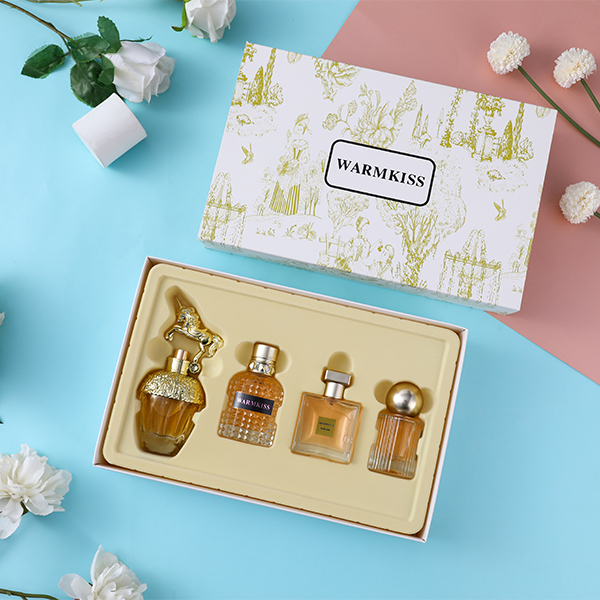
Fragrance is highly cultural.
A scent that is considered elegant and subtle in East Asia may feel too light to consumers in another market. Likewise, a strong oriental fragrance that performs well in the Middle East may not be the preferred choice for every Asian consumer.
For example:
| Market | Common Direction | Product Considerations |
| Europe | Woody, leather, niche and complex fragrances | Individuality and fragrance quality |
| North America | Fruity, floral, gourmand, woody-amber | Projection and everyday versatility |
| Middle East | Oud, amber, rose, saffron and rich oriental accords | High concentration and longevity |
| East Asia | Tea, citrus, white floral, musk and skin scents | Clean, subtle and close-to-skin |
| Southeast Asia | Citrus, aquatic and fruity fragrances | Freshness and frequent use |
| Africa | Richer fragrances and strong longevity | Projection, durability and value |
This is why custom perfume manufacturing should begin with market research rather than simply choosing a popular fragrance from a factory’s existing catalog.
4. Product Concentration Should Match the Target Customer
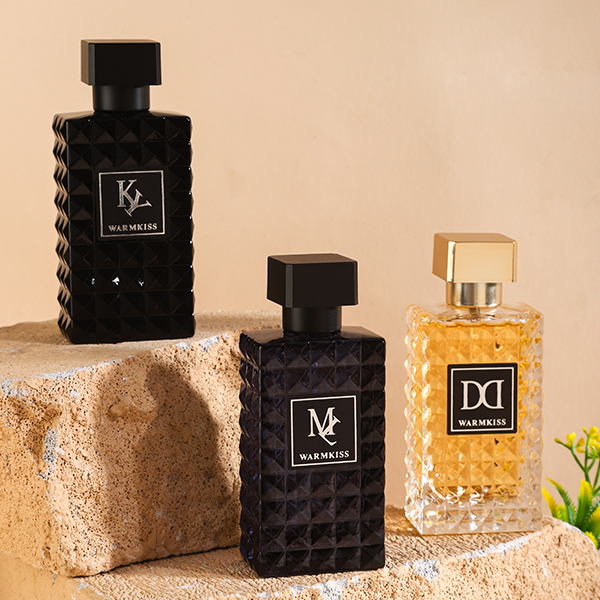
The same fragrance concept can also be developed into different product forms.
A brand may choose:
- Eau de Parfum (EDP)
- Eau de Toilette (EDT)
- Extrait de Parfum
- Body Mist
- Perfume Oil
- Rollerball Perfume
- Solid Perfume
For example, a Middle Eastern customer may prefer a stronger and longer-lasting fragrance, while a Southeast Asian brand may place greater emphasis on freshness and easy reapplication.
As an experienced perfume OEM and ODM manufacturer in China, AILI can discuss fragrance concentration, bottle size, packaging and application scenarios with customers before finalizing the production specification.
5. Packaging Expectations Are Also Different
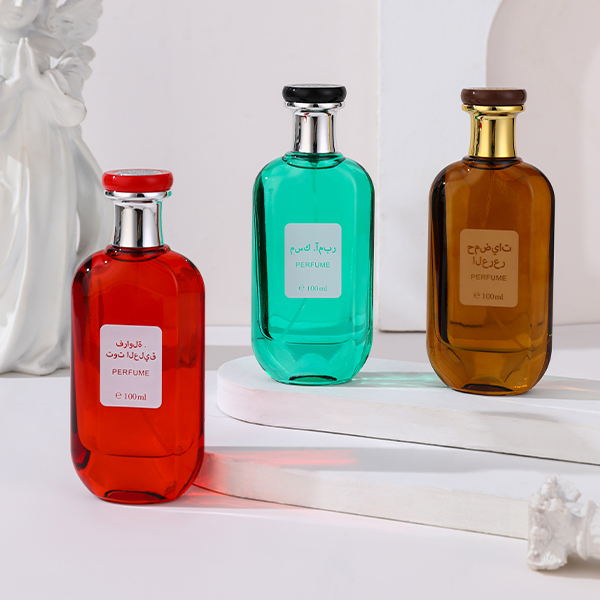
In domestic business, packaging can sometimes be treated mainly as a visual marketing tool. In international perfume business, it has both commercial and functional importance.
The bottle, pump, cap and outer box all influence the customer’s perception of value.
A luxury-looking perfume bottle can help position a product in the premium segment, while lightweight and cost-efficient packaging may be more appropriate for mass-market distribution.
More importantly, invisible components such as the perfume spray pump and bottle cap affect the actual user experience. A beautiful bottle is meaningless if the pump becomes difficult to use after several applications.
AILI therefore considers fragrance, bottle, spray pump, cap, decoration and outer packaging as one integrated product-development process.
6. Export Pricing Is More Than Factory Cost
Domestic quotations often focus heavily on the ex-factory price.
International perfume orders require a broader calculation.
A professional quotation may need to consider:
Fragrance + bottle + pump + cap + box + decoration + labor + testing + export packaging + logistics + customs-related costs + trade terms.
The customer may also ask for FOB, CIF or other international trade terms.
For private-label perfume brands, MOQ is another important factor. A start-up brand may need a smaller initial order, while an established distributor may require tens of thousands of units.
The right perfume manufacturer for private label should therefore be able to balance price, MOQ, customization and production efficiency rather than simply offering the lowest unit price.
7. International Orders Usually Have Longer Development Cycles
Domestic business can sometimes operate around existing stock and rapid replenishment.
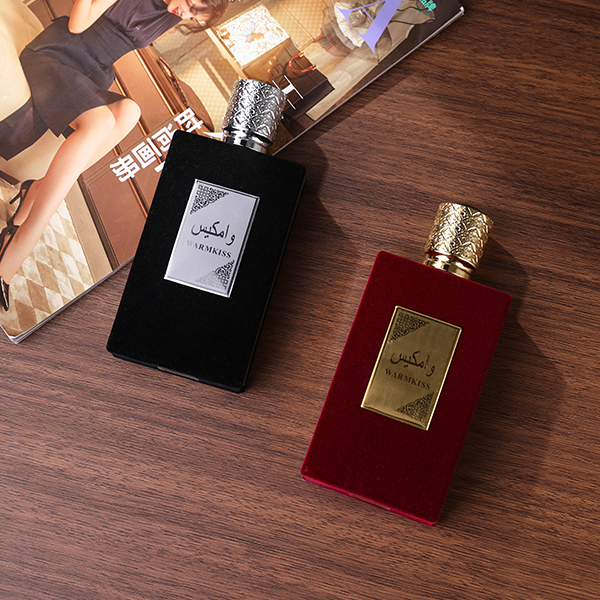
A customized export perfume order usually requires more stages:
Market requirement → fragrance selection → sampling → fragrance adjustment → bottle selection → packaging design → quotation → compliance documentation → pre-production sample → mass production → inspection → export shipment.
Custom bottles, printed boxes and special decorations can add additional lead time.
For this reason, overseas customers should communicate their launch schedule with the factory as early as possible.
8. Why Global Brands Work with AILI
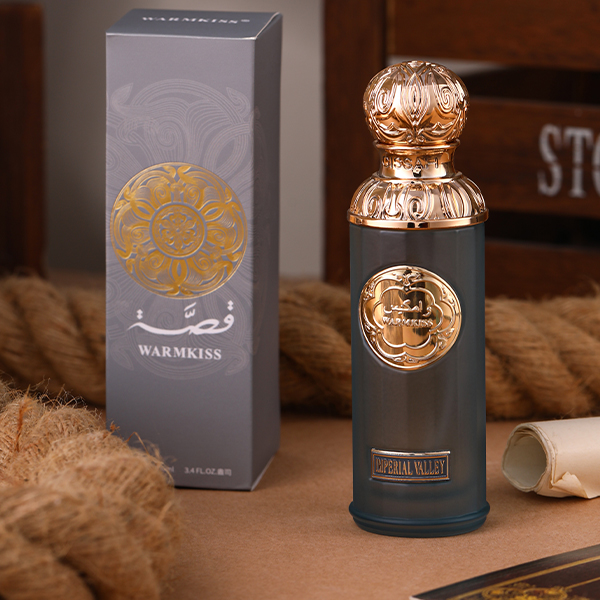
At Shandong Aili Cosmetics Co., Ltd., we approach perfume manufacturing from both a production and export perspective.
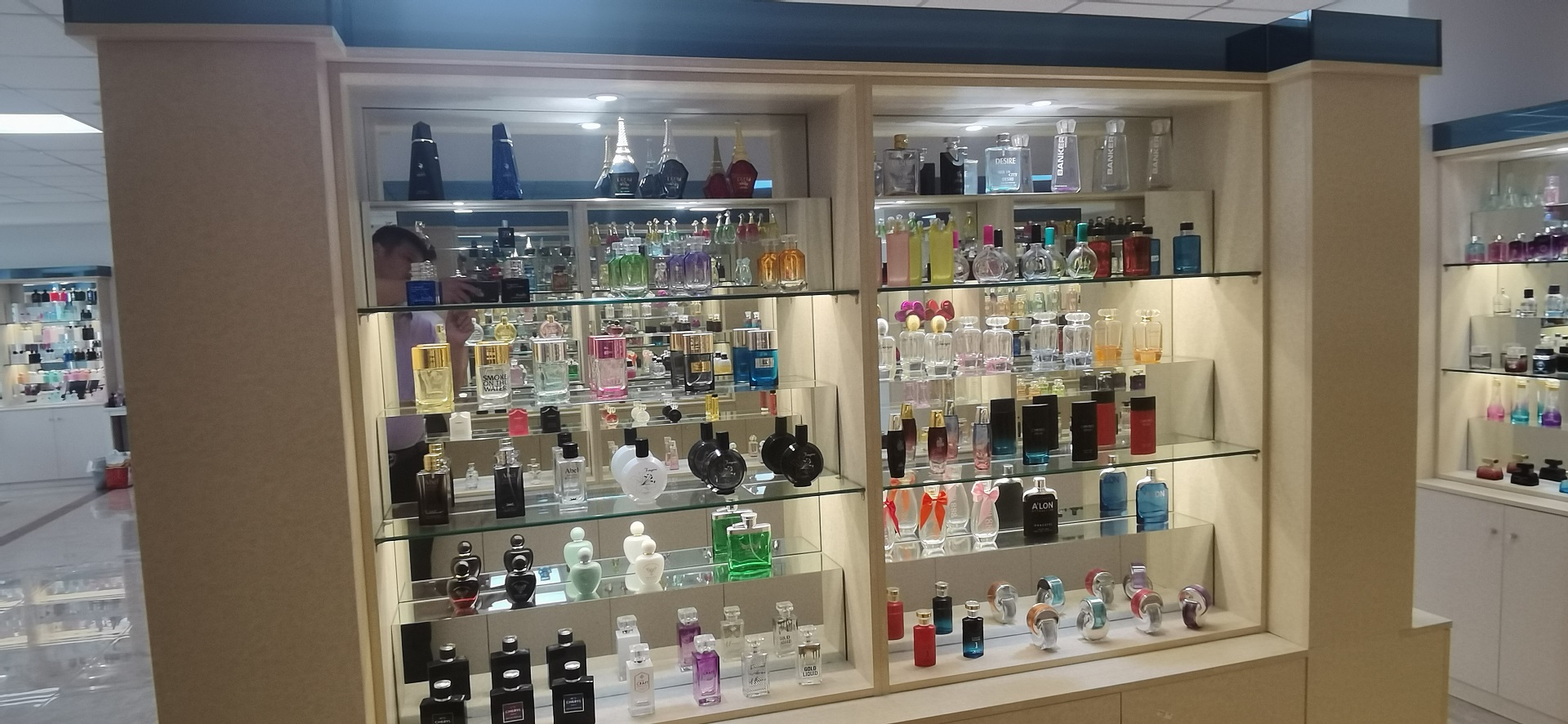
Founded in 1993, AILI has more than 30 years of manufacturing experience. Our modern production base includes 48 perfume production lines, with reported production capacity of up to 300,000 bottles per day.
Our fragrance raw-material sourcing includes suppliers such as Givaudan and Robertet, supporting the development of different fragrance directions for international customers.
Our capabilities cover:
- Perfume OEM/ODM
- Private label perfume
- EDP and EDT
- Body mist
- Fragrance products
- Reed diffusers and home fragrance
- Personal-care fragrance products
- Bottle and packaging customization
- Bulk perfume manufacturing
- Export-oriented documentation and support
We also understand that customers from different markets need different solutions. A Middle Eastern brand may require rich oriental fragrance profiles, while a European customer may focus more on niche positioning and sophisticated fragrance structures.
The factory’s role is therefore not simply to manufacture what the customer orders, but to help translate the customer’s market concept into a manufacturable product.
9. The Right Export Mindset: Start with the Market, Not the Product
For overseas perfume buyers, we recommend reversing the traditional domestic-sales approach.
Instead of asking:
“What perfume do you have?”
start with:
“Where will the perfume be sold, who will buy it, and how should the product be positioned?”
The answers determine the fragrance family, concentration, bottle size, packaging, price structure, documentation and logistics plan.
This approach is particularly important for China private label perfume manufacturing, because OEM production is most effective when the factory understands the commercial purpose behind the product.
Frequently Asked Questions
What is the biggest difference between domestic and international perfume business?
International perfume business involves additional regulatory, logistics, cultural, documentation and trade requirements. A domestic formula and package should not automatically be treated as export-ready.
Can one perfume formula be sold worldwide?
It can sometimes be marketed across several countries, but fragrance preferences and regulatory requirements differ. Formula, labeling, concentration and packaging may need market-specific adjustments.
Why is perfume transportation more complicated for export?
Many alcohol-based perfumes require special transportation arrangements and documentation. Exporters need to coordinate product classification, shipping requirements and customs procedures.
What should I prepare before contacting a China perfume OEM manufacturer?
Ideally, provide your target country, customer profile, fragrance direction, bottle size, expected quantity, target price and launch schedule. A reference fragrance can also make development more efficient.
Can AILI develop perfume for a private-label brand?
Yes. AILI provides OEM/ODM services covering fragrance development, sampling, bottle and packaging selection, customization and mass production.
Does AILI produce products other than perfume?
Yes. In addition to perfume, AILI’s fragrance-related capabilities include body mist, reed diffusers and other fragrance and personal-care products, allowing brands to develop broader fragrance product lines.
Conclusion
Perfume export is not simply a domestic perfume product plus international shipping.
The target market determines the fragrance.
The regulations determine the formula and documentation.
The logistics determine how the product can be shipped.
The packaging influences perceived value and user experience.
And the commercial terms determine whether the project is sustainable for both the factory and the brand.
For overseas brands looking for a China perfume OEM manufacturer, private label perfume factory or long-term perfume ODM partner, Shandong Aili Cosmetics combines manufacturing experience, fragrance sourcing, packaging integration and export-oriented service to support the complete journey from fragrance concept to finished product.
The right way to export perfume is to think globally before production begins.