
Southeast Asia vs. Middle East Perfume Markets
Compare Southeast Asian and Middle Eastern perfume fragrance markets across fragrance preferences, perfume concentration, packaging, pricing, regulations and supply chains. Discover how Shandong Aili Cosmetics approaches both markets through flexible perfume fragrance OEM/ODM manufacturing.
The Middle East has long been an important destination for Chinese perfume manufacturers, supported by strong fragrance traditions, established wholesale networks and demand for concentrated, long-lasting scents. However, ongoing geopolitical tensions and uncertainty surrounding some traditional shipping routes have encouraged manufacturers to diversify their export markets. Southeast Asia, particularly Indonesia, Malaysia, Thailand and Vietnam, is attracting growing attention as a potential second growth market.
For fragrance manufacturers such as Shandong Aili Cosmetics Co.,Ltd., the two regions offer different but complementary opportunities. The Middle East generally favors richer fragrance profiles, substantial packaging and established wholesale distribution, while Southeast Asia offers opportunities in lighter everyday perfumes, compact packaging and digitally driven local brands.
Understanding these differences is essential before transferring existing products, formulas or packaging designs from one market to another.
1. Southeast Asia and the Middle East: Market Differences at a Glance
| Market factor | Middle East | Southeast Asia |
| Main consumption drivers | Fragrance culture, personal presentation, gifting and social occasions | Daily grooming, lifestyle, affordability and social commerce |
| Popular fragrance directions | Oud, amber, rose, saffron, incense and woody accords | Citrus, fruity, floral, aquatic, tea and soft musk |
| Common product formats | EDP, concentrated perfumes, perfume oils and gift sets | EDT, EDP, body mist and compact everyday perfumes |
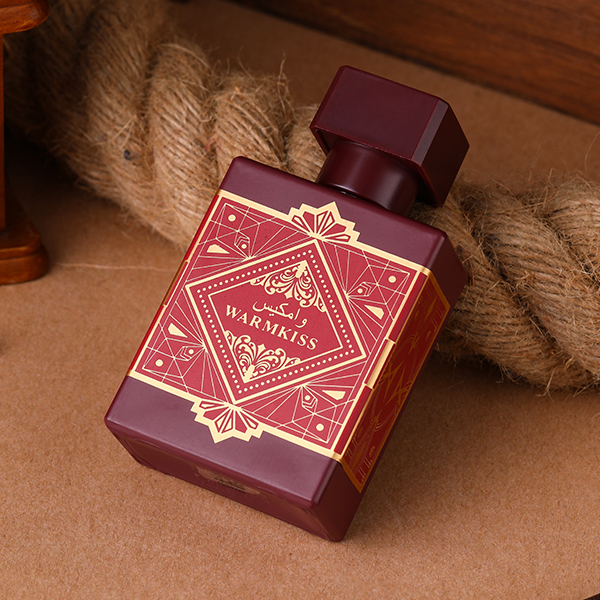
| Packaging preferences | Decorative glass bottles, substantial caps and premium gift boxes | Compact bottles, practical designs and visually distinctive packaging |
| Commercial channels | Wholesalers, perfume retailers and distributors | Local brands, retail chains, marketplaces and social commerce |
| Regulatory considerations | Country-specific import, labeling and product requirements | BPOM in Indonesia, NPRA in Malaysia and Thai FDA requirements |
| Business opportunities | Higher-value fragrance positioning and wholesale distribution | Product variety, flexible OEM/ODM and repeat product launches |
These are broad market tendencies rather than fixed rules. Premium niche fragrances exist in Southeast Asia, while affordable everyday perfumes are also widely sold in the Middle East.
2. Fragrance Preferences: Rich Oriental Notes vs. Fresh Everyday Scents
Fragrance preference is one of the most important differences between the two regions.
In Saudi Arabia, the UAE and other Middle Eastern markets, oud, amber, rose, saffron, musk, leather and incense remain important fragrance directions. Consumers are familiar with layered compositions and stronger scent profiles. Perfume is also closely connected with hospitality, gifting, personal presentation and cultural occasions.
Consequently, concentrated Eau de Parfum, extrait-style products and alcohol-free perfume oils can all find commercial opportunities, depending on the target customer.
Southeast Asian consumers often face different everyday conditions. High temperatures, humidity, commuting and frequent outdoor activities make fresh, comfortable fragrances commercially relevant. Citrus, green apple, pear, white peach, jasmine, orange blossom, tea notes, clean musk and light woody accords are useful directions for product development.
For example, a fragrance built around bergamot and green apple, followed by jasmine or white tea and finished with soft musk, may be more suitable for daily office use than a heavy oud-and-leather composition.
This does not mean Southeast Asian consumers reject strong perfumes. Rather, manufacturers should develop different fragrance portfolios instead of assuming that a successful Middle Eastern formula will perform equally well in tropical markets.
3. Perfume Concentration and Formula Performance in Different Climates
Perfume concentration is often discussed when comparing these markets, but concentration alone does not determine fragrance performance.
EDT, EDP and extrait are commonly used commercial classifications. Their actual fragrance concentration ranges vary by brand and formulation. A higher percentage of fragrance concentrate does not automatically produce better projection or longer wear.
In hot and humid Southeast Asian conditions, a perfume must be evaluated for more than its initial scent intensity. Important factors include:
- Opening performance:Citrus and fruity top notes should remain clear rather than becoming sharp or excessively volatile.
- Dry-down:Musk, soft woods and floral notes should develop without creating an overly heavy finish.
- Spray behavior:The formula should work consistently with the selected perfume pump and bottle.
- Physical stability:The finished product should be assessed for clarity, color changes, sediment, separation and compatibility with packaging materials.
Middle Eastern products may place greater emphasis on richer base notes, stronger fragrance intensity and concentrated formats. However, the appropriate formula still depends on the intended consumer and use environment.
At Shandong Aili Cosmetics, we believe the finished perfume should be tested in its actual formulation and packaging. Evaluating fragrance concentrate alone cannot fully predict the performance of a finished commercial product.
4. Packaging: Premium Presentation vs. Portable Convenience
Packaging differences are visible at the product level.
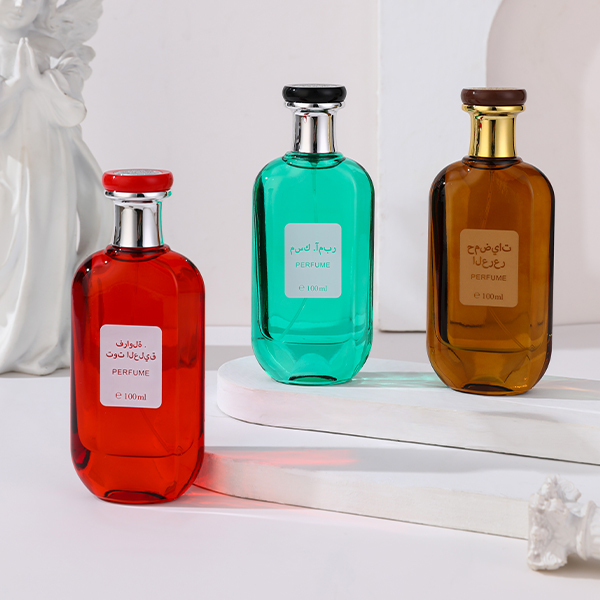
Middle Eastern buyers often favor 100ml perfume bottles with thick glass bases, metallic decoration, substantial caps and carefully finished gift boxes. These features create a stronger visual and tactile impression, particularly in wholesale gift-oriented product lines.
In Southeast Asia, 30ml and 50ml formats can be useful for everyday perfumes, trial purchases and travel-friendly products. Smaller bottles also allow local brands to introduce more fragrance variations without committing immediately to large-format packaging.
Practical packaging options include:
- 30ml and 50ml glass perfume bottles with compact dimensions.
- Lightweight caps made from suitable plastic or metal components.
- Fine-mist spray pumps with consistent dosage.
- Simple folding cartons or rigid boxes according to the product’s positioning.
- 10ml travel sprays and roll-on perfume formats for selected product lines.
A lighter package should not mean lower functional quality. Bottle neck dimensions, pump compatibility, leakage resistance, cap retention and transport protection still require attention.
For OEM buyers, the objective is to balance appearance, product protection, filling efficiency and total packaging cost.

5. Pricing, Distribution and OEM/ODM Business Models
The Middle East and Southeast Asia also differ in their commercial structures.
Middle Eastern perfume distribution often involves importers, wholesalers, perfume shops and regional distributors. A successful product may develop into a substantial repeat-order business once it gains acceptance in a local distribution network.
Southeast Asia offers a more fragmented but flexible opportunity. Local fragrance brands, online sellers, retail chains and social-commerce businesses can all become potential OEM/ODM customers. Platforms such as TikTok Shop and Shopee have increased the visibility of locally developed consumer brands in several Southeast Asian countries.
For manufacturers, this creates demand for smaller product collections, more frequent launches and packaging variations.
Indicative FOB prices must be evaluated against bottle size, fragrance concentrate cost, pump and cap specifications, carton quality, order quantity and shipping terms. A 30ml perfume with standard packaging cannot be directly compared with a 100ml perfume using heavy glass and premium decoration.
We therefore recommend preparing separate quotation structures for the two markets rather than applying one universal price list.
6. Regulatory Requirements: Indonesia, Malaysia and Thailand
Regulatory compliance is a major consideration when entering Southeast Asia.
Indonesia: Imported cosmetics generally require BPOM-related product notification and compliance with applicable cosmetic requirements. Halal certification is also becoming increasingly important. Indonesia’s phased halal obligations for cosmetics require businesses to pay attention to applicable implementation deadlines, product categories and certification arrangements.
Malaysia: Cosmetic products are regulated by the National Pharmaceutical Regulatory Agency (NPRA). Notification, ingredient compliance, labeling and responsible-party requirements should be confirmed before market entry. Halal certification can also strengthen commercial acceptance among Muslim consumers.
Thailand: Cosmetic products fall under the Thai Food and Drug Administration framework, with relevant notification, labeling and ingredient requirements.
Manufacturers should not assume that one country’s approval automatically covers another. Alcohol source, fragrance ingredients, animal-derived materials, labeling and product documentation may all require review.
For halal-sensitive projects, the complete formulation and manufacturing process should be assessed. A fragrance product cannot be considered halal-compliant simply because it uses a particular type of alcohol or excludes one animal-derived ingredient.
7. How Shandong Aili Cosmetics Can Serve Both Markets
We see Southeast Asia and the Middle East as two complementary directions rather than competing export destinations.
Our experience in perfume manufacturing and OEM/ODM development provides a foundation for serving buyers with different product requirements. With 48 perfume production lines and production capacity exceeding 300,000 bottles per day, we can support a range of perfume formats and packaging configurations.
For Middle Eastern customers, we can focus on richer fragrance directions, larger bottle formats, decorative packaging and gift-oriented product development.
For Southeast Asian customers, the development priorities may include fresh fruity and floral fragrances, compact 30ml and 50ml bottles, practical spray components and flexible product collections.
Our development process can also consider fragrance selection, bottle and cap coordination, outer-box design and finished-product evaluation. For customers targeting Indonesia or Malaysia, regulatory and halal-related requirements should be discussed early, before formula and packaging specifications are finalized.
The most effective approach is not to build two entirely separate manufacturing systems. It is to maintain a shared manufacturing foundation while developing market-specific fragrance formulas, packaging combinations and compliance documentation.
8. Frequently Asked Questions
- Are Southeast Asian consumers more interested in fresh perfumes than Middle Eastern consumers?
Fresh citrus, fruity, floral and aquatic fragrances are important in Southeast Asia, particularly for everyday use. Middle Eastern markets have stronger established demand for oud, amber, musk and other rich fragrance directions, although both regions contain diverse consumer segments.
- Can a Middle Eastern perfume formula be sold directly in Indonesia or Thailand?
It can be tested, but direct market transfer is not always advisable. Fragrance intensity, dry-down, packaging size and price positioning should be evaluated against local consumer preferences and climate conditions.
- Which perfume sizes are suitable for Southeast Asian markets?
30ml and 50ml bottles are useful starting formats for everyday perfume collections. Smaller travel sprays and roll-on products can also serve trial, gifting and convenience-oriented customers.
- Is halal certification mandatory for all perfumes exported to Southeast Asia?
Requirements differ by country and implementation schedule. Indonesia has introduced phased halal obligations for cosmetics, while Malaysia has its own regulatory and certification framework. Exporters should confirm current requirements for each product and destination.
- Is Southeast Asia a suitable market for perfume OEM/ODM brands?
Yes. Local fragrance brands and online sellers create opportunities for private-label development, especially where manufacturers can provide flexible fragrance selection, packaging coordination and reliable repeat production.
- Is perfume manufacturing in Southeast Asia mainly a low-price business?
No. The region includes affordable everyday products as well as premium local brands. Product differentiation, formula quality, packaging design and brand positioning all influence the final selling price.
- Should manufacturers develop separate product lines for the Middle East and Southeast Asia?
In most cases, yes. Shared production equipment and packaging supply chains can be used where appropriate, but fragrance profiles, bottle sizes, decoration and regulatory documentation should be adapted to each market.
- What should buyers consider when selecting a Chinese perfume OEM/ODM supplier?
Buyers should evaluate fragrance development capability, formula stability, bottle and pump compatibility, packaging quality, production consistency, documentation and communication. A competitive quotation is important, but it should not replace a complete assessment of the finished product.
Conclusion
The Middle East remains an important market for concentrated fragrances, distinctive packaging and established wholesale distribution. Southeast Asia offers a different growth opportunity, supported by young consumers, local fragrance brands, digital retail channels and demand for practical everyday products.
For Chinese perfume manufacturers, market diversification should not mean simply redirecting existing inventory. It requires a more careful approach to fragrance formulation, concentration, packaging, pricing and regulatory compliance.
At Shandong Aili Cosmetics, we believe the long-term opportunity lies in combining manufacturing efficiency with market-specific product development. By maintaining the ability to serve both premium Middle Eastern fragrance projects and more flexible Southeast Asian perfume collections, we can build a more diversified and resilient international OEM/ODM business.