Why Similar Perfumes Can Have Very Different Prices
Learn how fragrance concentration, alcohol quality, glass bottles, packaging, order volume, OEM perfume manufacturing requirements, and payment terms affect perfume manufacturing costs and FOB pricing.
في شركة شاندونغ أيلي لمستحضرات التجميل الشركة المحدودة., ، نؤمن بأن الجوهر الحقيقي للعطر يكمن في رائحته وجودته والمشاعر التي يثيرها — وليس في هوامش الربح التي تحددها شهرة العلامة التجارية وحدها. لفترة طويلة جدًّا، تم تصنيف العطور عالية الجودة على أنها سلع فاخرة حصرية. نحن ننظر إلى العطر من منظور مختلف: فهو وسيلة يومية للتعبير عن الذات والراحة الشخصية، وينبغي أن يكون في متناول الجميع بسهولة.
إن هدفنا يتجاوز بكثير مجرد خفض تكاليف الإنتاج. فمن خلال الاستفادة من خبرتنا التي تمتد لعقود في مجال التصنيع، وسلسلة التوريد المتكاملة، ومراقبة الجودة التي لا تقبل المساومة، نسد الفجوة بين تصميم العطور الفاخرة والقدرة على شرائها يوميًا بأسعار معقولة. نحن لا نسعى إلى منافسة قطاع المنتجات الفاخرة، بل إلى الارتقاء بالقيمة. ومن خلال تقديم جودة لا تضاهى بسعر يعكس القيمة الحقيقية للمنتج، تُمكّن شركة شاندونغ أيلي شركاءها ومستهلكيها حول العالم من الاستمتاع بفن العطور الراقية كمتعة يومية، وليس كرفاهية محصورة لفئة معينة.
Two 100ml perfumes may look similar on a quotation sheet but have significantly different manufacturing costs. One may use a standard glass bottle, a conventional atomizer, and a simple folding carton. The other may feature a customized fragrance formula, a heavier glass bottle, a decorative metal cap, and premium gift packaging.
For perfume wholesalers, importers, and private-label brands, understanding these differences is essential to making sound purchasing decisions.
في Aili Cosmetics Factory, we approach perfume pricing as a combination of formula development, packaging specifications, manufacturing requirements, order volume, and commercial terms. Our goal is to help customers develop products that meet their target retail prices without compromising essential quality requirements.
The final price of a perfume is determined by its complete specification and business conditions—not simply by fragrance concentration or bottle size.
1. Fragrance Formula and Alcohol Quality
The fragrance liquid is one of the fundamental cost components of a perfume. Its cost depends on the ingredients, formula complexity, concentration, and quality requirements.
Fragrance Concentration and Raw Material Selection
A perfume containing a higher proportion of fragrance concentrate may cost more than a comparable product with a lower concentration, but the relationship is not always proportional. Different fragrance formulas can have substantially different raw material costs even at the same concentration.
For example, a formula built around relatively economical materials may cost less than one requiring more expensive specialty ingredients, regardless of whether both are marketed as Eau de Parfum.
When developing affordable luxury perfumes or perfume alternatives, we recommend agreeing on the scent profile, target concentration, performance expectations, and budget before finalizing the formula.
Alcohol Quality and Liquid Stability
The quality and suitability of the alcohol used in a perfume also matter. Cosmetic-appropriate ethanol, applicable denaturing requirements, supplier documentation, and consistency between batches should be considered alongside price.
Other liquid-related costs may include blending, maturation where required by the formula, filtration, stability evaluation, and quality-control procedures. These requirements depend on the product and manufacturing process.
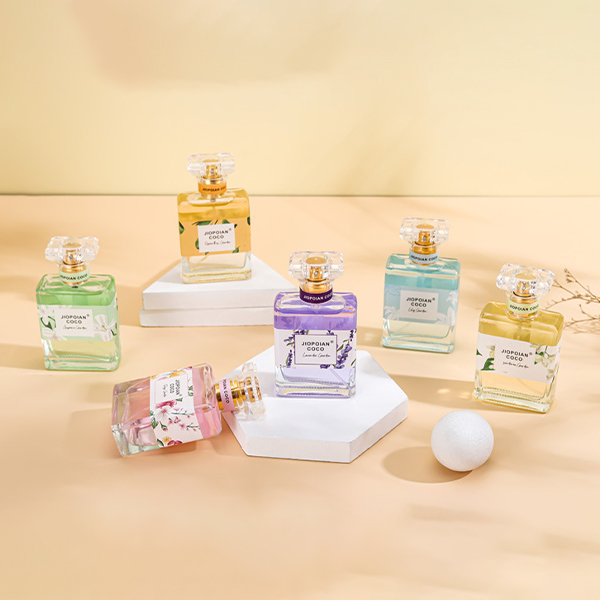
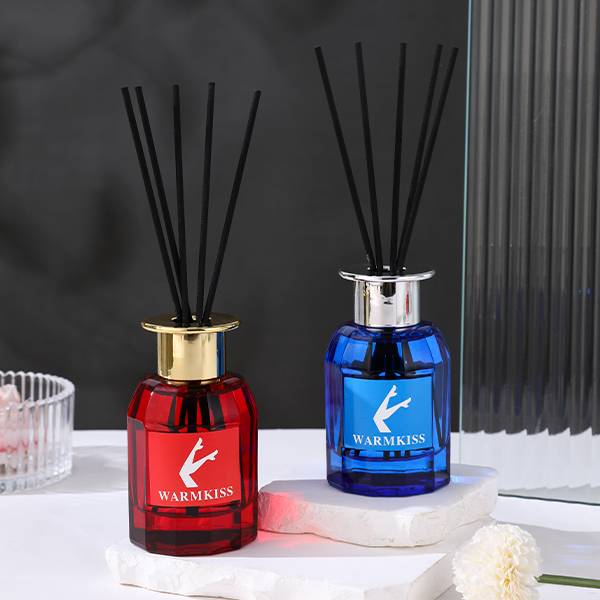
2. Glass Bottles, Atomizers, and Caps
Packaging components can significantly influence the cost of a finished perfume. In some projects, the packaging difference between two products is more commercially important than a small difference in fragrance concentration.
| Component | Lower-cost option | Higher-cost option |
| زجاجة زجاجية | Standard stock bottle | Heavy glass or customized bottle |
| Surface decoration | Clear glass or simple printing | Gradient coating, frosting, plating, or complex decoration |
| مرذاذ | Standard compatible pump | Premium finish or specialized performance requirements |
| القبعة | Standard plastic cap | Heavier ABS, metal, or customized cap |
| التسمية | Standard paper label | Foil, specialty materials, or custom finishing |
The most expensive component is not automatically the best choice. A premium cap, for example, may improve the perceived value of a fragrance, but it must also fit the bottle securely and work reliably in production.
Atomizer selection should consider spray consistency, compatibility, leakage resistance, and user experience. Buyers should evaluate actual samples rather than assume that a higher-priced pump always delivers better performance.
For wholesalers targeting Iran or other price-sensitive markets, a standard bottle with carefully selected decorative details may provide a better balance between shelf appeal and manufacturing cost than a fully customized package.
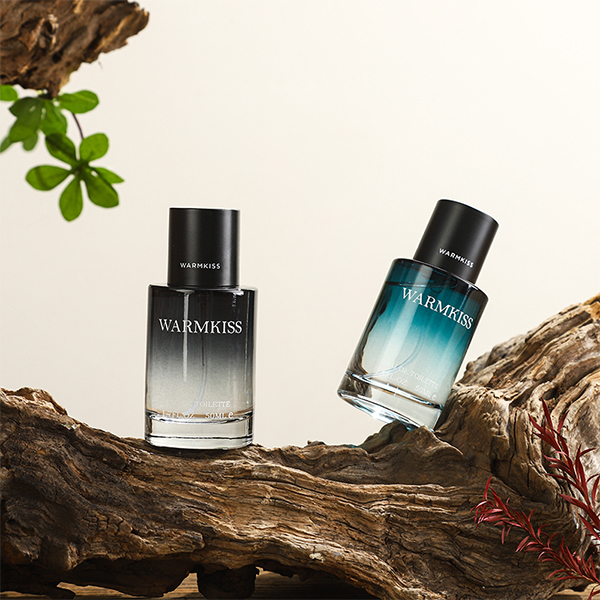
3. Outer Packaging and Transport Protection
The retail box is more than a container. It contributes to brand presentation, product protection, and the customer’s perception of value.
A simple folding carton and a gift box with foil stamping, embossing, laminated surfaces, and a custom insert require different materials and production processes. Inner trays made from paperboard, molded pulp, or foam also affect the total packaging cost.
Export packaging creates another consideration. Carton strength, bottle separation, palletization, protective materials, and shipping configuration should be selected according to the product, transport route, and handling risks.
For glass perfume bottles, insufficient protection can create breakage, leakage, claims, and replacement costs. However, unnecessarily heavy packaging may increase material consumption, carton dimensions, and freight expenses.
We recommend evaluating the complete packaging solution rather than minimizing the cost of each individual component.
4. Order Quantity, MOQ, and Production Efficiency
Order volume directly affects the way fixed and variable costs are distributed.
A small order may require purchasing packaging in limited quantities, arranging additional setup work, and allocating production time to a relatively small number of units. A larger order may allow more efficient material purchasing and production planning, although it also requires more working capital and inventory capacity.
| Purchasing scenario | Typical cost consideration | Recommended approach |
| Small trial order | Higher fixed cost per unit may apply | Use stock bottles and existing packaging |
| Medium-volume order | Better purchasing and production efficiency may be possible | Standardize components across several scents |
| Large-volume order | Potential economies of scale | Confirm demand before committing to inventory |
| Custom bottle development | Tooling and development expenses | Agree on tooling ownership and amortization |
There is no universal MOQ that suits every perfume project. Requirements depend on the formula, bottle, decoration, packaging supplier, and production arrangement.
For a new private-label brand, starting with existing bottle molds and a limited range of packaging components can reduce upfront investment. Custom molds may become more attractive when projected sales justify the development cost.
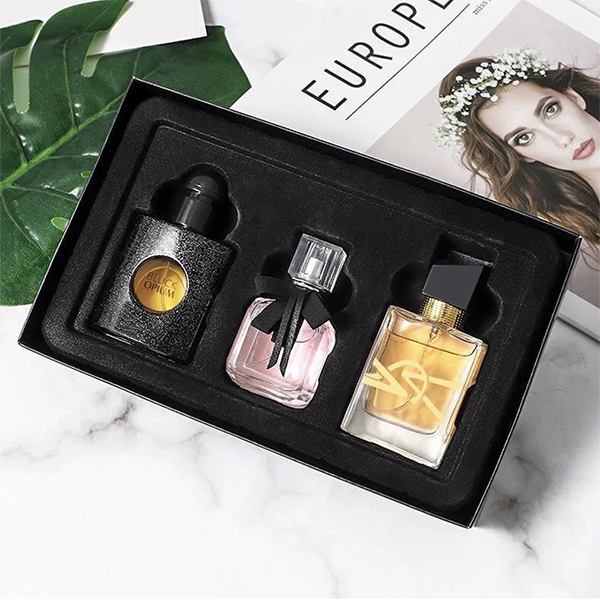
5. OEM, ODM, and Factory-Owned Brand Pricing
The purchasing model also affects the quotation.
Factory-owned brand products may be available in established specifications, with existing packaging and fewer development requirements. Their price depends on the brand, product configuration, stock availability, and order terms.
OEM perfume manufacturing generally involves producing products according to a buyer’s brand and agreed specifications. Costs can include customized labels, cartons, packaging procurement, and production setup.
ODM perfume development may involve additional work on fragrance selection, product design, and packaging coordination. The exact scope varies by project.
Private labeling does not automatically make a perfume more expensive or cheaper. A large OEM order using standard components may achieve an attractive unit cost, while a small order requiring customized packaging can be comparatively expensive.
At Aili Cosmetics, we encourage buyers to distinguish between the product itself, customization expenses, and one-time development costs before comparing quotations.
6. Additional Costs That Buyers Should Include
Beyond the main ingredients and packaging, several less visible factors can affect the final quotation.
Tooling and mold development: New bottle or cap designs may require dedicated tooling. Buyers should clarify the fee, ownership, exclusivity, and whether any refund or amortization arrangement applies.
Testing and documentation: Product-specific testing, laboratory work, and destination-market documentation may create additional expenses. Requirements should be confirmed before production.
Manufacturing yield and rework: Component defects, filling adjustments, assembly problems, and quality rejects can affect the number of saleable units. Actual rates depend on the product and process.
Production complexity: Unusual bottles, multiple decorative processes, special assembly requirements, or more demanding quality checks may increase labor and manufacturing overhead.
Payment terms and financing: Deposits, balance-payment timing, credit terms, and currency exposure affect working capital and commercial risk. Any associated price adjustment should be calculated from the actual terms rather than an arbitrary standard percentage.
Freight and trade terms: FOB pricing does not represent the buyer’s complete landed cost. Freight, insurance, import duties, taxes, customs clearance, and local distribution may need to be added according to the agreed Incoterm and destination.
For shipments involving Iran, buyers and suppliers should also verify applicable sanctions, export-control, banking, customs, and logistics requirements. A proposed payment or transit route must be legally permissible for the specific transaction.
7. How to Build a More Accurate Perfume Quotation
A reliable quotation starts with a complete product brief. We recommend confirming the following information before requesting a final price:
Bottle size, fragrance concentration, formula requirements, and target scent profile.
Glass bottle model, atomizer, cap, decoration, label, and outer-box specifications.
Order quantity per fragrance and the total quantity across the collection.
Whether the order uses a factory-owned brand, OEM private label, or a more extensive ODM development process.
Sample approval, quality-control requirements, testing, and documentation.
Payment terms, delivery schedule, destination, and agreed Incoterm.
If a quotation exceeds the buyer’s budget, the most effective response is to review the specification systematically. A standard bottle, simplified decoration, shared packaging across several scents, or a larger consolidated order may reduce cost without changing the core fragrance concept.
At the same time, buyers should avoid cutting costs in ways that compromise liquid consistency, atomizer reliability, packaging compatibility, or transport protection.
الأسئلة الشائعة
1. What is the biggest factor affecting perfume manufacturing costs?
There is no universal answer. Formula costs, packaging, order volume, and customization requirements can each be decisive, depending on the product specification.
2. Does a higher fragrance concentration always mean a more expensive perfume?
Not necessarily. Concentration matters, but formula composition and the cost of individual fragrance materials also influence the liquid cost.
3. Why can two 100ml perfumes have very different FOB prices?
They may differ in fragrance formula, alcohol specifications, bottle weight, atomizer, cap, decoration, carton, order quantity, and commercial terms.
4. Is OEM perfume manufacturing cheaper than buying a factory-owned brand?
Not in every case. OEM may be cost-effective at suitable volumes, but customization, packaging procurement, and development costs can increase the initial investment.
5. Can using a standard glass bottle reduce costs?
Yes, it can avoid some mold-development expenses and may simplify procurement. The actual saving depends on the bottle, order quantity, and decoration requirements.
6. Do payment terms affect perfume prices?
They can. Longer credit periods or greater financing and currency risks may affect commercial pricing, subject to the supplier’s policies and the agreed contract.
7. Should buyers compare perfume quotations using FOB prices alone?
No. FOB is only one part of the purchasing calculation. Buyers should also estimate freight, insurance where applicable, duties, taxes, clearance, and local distribution costs.
8. How can buyers reduce perfume costs without sacrificing quality?
Use a clear target budget, select suitable stock packaging, standardize components, optimize order quantities, test samples, and prioritize spending on the elements customers notice and value most.
Conclusion: Price the Complete Product, Not Just the Perfume Liquid
Successful perfume sourcing requires a complete understanding of the product and the transaction. Fragrance ingredients and alcohol matter, but glass bottles, atomizers, caps, decoration, cartons, order volume, customization, testing, payment terms, and transport requirements all contribute to the final price.
At Shandong Aili Cosmetics Co., Ltd., we work with international buyers to develop fragrance products around their target markets, specifications, and commercial objectives. By defining requirements clearly and evaluating the full cost structure, buyers can make more meaningful supplier comparisons and build affordable fragrance collections with sustainable margins.
The best perfume quotation is not necessarily the lowest one. It is the quotation that delivers the required quality, presentation, compliance, and commercial value at a workable total cost.