
The Science Behind Quality Ingredients & Value
Discover what really determines perfume quality, from natural fragrance ingredients and aroma chemicals to perfumery expertise and manufacturing. Explore how Shandong Aili Cosmetics develops cost-effective private label perfumes through OEM/ODM services.
As global consumers become more selective about spending, affordable alternatives to luxury perfumes are attracting greater attention. Buyers increasingly compare fragrance performance, scent profile, packaging, and price instead of relying exclusively on brand reputation or premium marketing claims.
For perfume brands, importers, and distributors, this shift creates an important opportunity: developing fragrances that deliver a satisfying olfactory experience at a commercially competitive price.
At Shandong Aili Cosmetics Co., Ltd., we believe that perfume quality should be evaluated through formulation, raw material selection, perfumery expertise, manufacturing consistency, and product safety—not simply through claims such as “100% natural” or a high retail price.
1. Why Affordable Perfumes Are Gaining Attention
Consumers are becoming more familiar with fragrance families, scent notes, concentration levels, and the differences between perfume products. Many can now identify the styles they enjoy and compare alternatives before making a purchase.
This creates opportunities for affordable perfumes, designer-inspired fragrances, and private label perfume brands. Rather than paying exclusively for luxury branding, consumers may prefer products that provide a similar overall scent direction at a more accessible price.
However, affordability does not automatically mean good quality, and an expensive perfume is not necessarily better in every dimension. Retail price also reflects packaging, advertising, distribution, brand positioning, and retail margins.
For international buyers, the commercial challenge is to balance three factors:
A fragrance profile that appeals to the intended customer.
Consistent performance and acceptable product quality.
A cost structure that supports sustainable margins.
This is where an experienced perfume OEM/ODM manufacturer can help turn a market opportunity into a commercially viable product.
2. Is “100% Natural Perfume” Always a Sign of Higher Quality?
Natural fragrance ingredients can be valuable, but natural origin alone does not establish that a perfume is superior, safer, or longer-lasting.
Some natural materials require substantial agricultural resources and complex extraction processes. Rose oil, jasmine absolute, and agarwood-derived materials are examples of ingredients whose cost can vary significantly with origin, grade, availability, extraction method, and market demand.
A finished perfume marketed at a very low price while claiming to contain exclusively rare, high-grade natural ingredients deserves closer examination. Nevertheless, price alone cannot prove whether a product’s natural-content claim is genuine; ingredient documentation and reliable testing are more meaningful.
There is also an important distinction between essential oils, fragrance compounds, and finished perfumes. Essential oils are extracted from natural materials, while fragrance compounds may combine natural extracts with synthetic aroma chemicals. A finished perfume normally contains a fragrance composition together with a suitable carrier system and other components required by its formulation.
Natural ingredients can contribute distinctive complexity and character, but they can also vary between batches. Some have restricted uses, oxidation concerns, or sensitisation potential. Consequently, responsible perfumery requires both creative judgment and technical control.
3. Natural and Synthetic Ingredients: Why Modern Perfumery Uses Both
Modern perfumery is a combination of chemistry, sensory evaluation, and artistic composition. Natural and synthetic ingredients serve different purposes, and neither category is inherently superior in every application.
| Ingredient category | Potential contribution | Key consideration |
| Natural essential oils and extracts | Botanical character, complexity, and distinctive nuances | Cost, availability, batch variation, and use restrictions |
| Synthetic aroma chemicals | Specific scent effects, consistency, and access to notes that are difficult to obtain naturally | Ingredient suitability, formulation, and safety requirements |
| Reconstituted fragrance accords | A balanced interpretation of a flower, wood, resin, or other scent profile | Quality depends on materials and perfumer expertise |
| Supporting formulation ingredients | Solubility, stability, and other functional properties | Must be suitable for the finished product and intended use |
Many floral scents cannot be reproduced economically by extracting a single natural oil. Some fragrance impressions, such as fresh linen, airy floral notes, or certain modern woody accords, are developed through carefully selected combinations of aroma materials.
Synthetic ingredients can also help improve consistency between production batches. Natural extracts, meanwhile, may provide nuances that contribute to the character of a composition.
The goal is not to maximize either natural or synthetic content indiscriminately. It is to create a fragrance that meets the desired sensory, technical, commercial, and safety requirements.
The International Fragrance Association (IFRA) similarly explains that fragrance formulas can contain both natural and synthetic molecules, and that natural origin does not automatically make an ingredient safer.
4. What Actually Determines the Quality of a Perfume?
For B2B buyers evaluating a fragrance supplier, several practical criteria matter more than a single marketing claim.
Fragrance Composition and Ingredient Selection
The type, grade, and proportion of fragrance materials influence the overall character and cost of a formula. A formula using expensive natural extracts may have a different cost structure from one built around carefully selected aroma chemicals.
However, there is no universal natural-ingredient percentage that defines a high-quality perfume. The appropriate composition depends on the fragrance concept, intended application, performance target, budget, and applicable safety limits.
The Perfumer’s Expertise
A skilled perfumer must balance individual notes rather than simply combine ingredients with pleasant smells. The opening, heart, and dry-down should work together as the fragrance develops.
A well-composed perfume can feel coherent, balanced, and distinctive without relying on the most expensive raw materials. Conversely, a high-cost ingredient list cannot compensate for an unbalanced composition.
Stability and Manufacturing Consistency
A commercial fragrance must perform consistently under its intended storage and usage conditions. Compatibility between the fragrance concentrate, alcohol or other carrier system, bottle, closure, and packaging can affect the finished product.
Maceration, chilling, filtration, and other processing steps may be used where appropriate to the formulation. They are not universal quality guarantees: the correct process depends on the formula and must be validated through suitable quality checks.
Fragrance Performance
Longevity and projection are important, but they should be assessed against the product’s intended positioning. A light everyday fragrance and a concentrated evening perfume may have different performance goals.
Testing should consider scent development over time, consistency between batches, appearance, stability, and compatibility with packaging. Claims such as “all-day lasting” should be supported by product-specific evaluation rather than assumed from ingredient cost alone.
5. How to Evaluate a Private Label Perfume Supplier
For importers and emerging brands, choosing the right private label perfume manufacturer in China requires more than comparing quotations.
| Evaluation factor | Questions buyers should ask |
| Fragrance development | Can the supplier develop or adapt scents for the target market? |
| Raw material sourcing | Can the supplier provide appropriate ingredient and documentation information? |
| Product consistency | Are there defined quality checks and batch-control procedures? |
| Stability and packaging | Has the finished product been evaluated for compatibility and stability? |
| Regulatory preparation | Can the supplier support relevant safety and compliance documentation? |
| Commercial flexibility | Are there suitable options for stock products, semi-customization, and full OEM/ODM? |
Buyers should also clarify minimum order quantities, sample-development procedures, production lead times, packaging costs, and ownership or permitted use of custom formulations.
For products entering regulated markets, the finished fragrance must meet applicable local requirements. IFRA Standards can provide an additional industry framework for the safe use of fragrance materials, but they do not replace the legal obligations or full safety assessment applicable to the finished product.
6. How Shandong Aili Cosmetics Supports Cost-Effective Fragrance Development
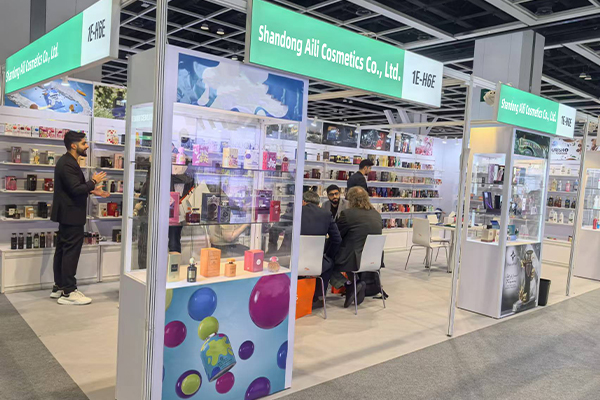
Shandong Aili Cosmetics Co., Ltd. has more than 30 years of manufacturing experience and serves international customers through perfume production, private label development, and OEM/ODM cooperation.
Our company works with established international fragrance houses, including Robertet, Givaudan, and Symrise, according to our company-provided information. These relationships support access to fragrance development resources for projects with different scent directions and commercial requirements.
With 48 perfume production lines and reported production capacity exceeding 300,000 bottles per day, Aili is positioned to support substantial production requirements. Actual capacity available for an individual project depends on product specifications, packaging, scheduling, and order volume.
Our approach to cost-effective perfume development focuses on several areas:
Target-cost formulation: Aligning the fragrance concept and material selection with the buyer’s budget and positioning.
OEM and private label customization: Coordinating scent selection, bottles, labels, and outer packaging.
Production quality management: Maintaining appropriate checks throughout manufacturing and finished-product inspection.
Export-oriented cooperation: Helping buyers coordinate product specifications, documentation, and shipment preparation.
The objective is not to promise that every affordable perfume can duplicate every luxury fragrance. It is to help customers develop products with a clear market position, appropriate quality, and a workable cost structure.
7. The Future of Affordable Fragrance: Value Without Misleading Claims
The future of affordable perfumery is not simply about replacing expensive natural materials with cheaper alternatives. It is about understanding what consumers value and allocating the formulation and manufacturing budget accordingly.
Some customers prioritize a recognizable floral or woody profile. Others look for a distinctive signature scent, attractive packaging, or dependable everyday performance. Different requirements call for different formulations and development strategies.
For fragrance brands, transparent product positioning is also increasingly important. Terms such as “natural,” “plant-based,” and “long-lasting” should be used accurately and supported by appropriate evidence. Clear specifications help buyers make informed decisions and reduce the risk of disputes after launch.
For manufacturers, the strongest long-term advantage comes from combining fragrance expertise, responsible sourcing, quality management, production efficiency, and responsive OEM/ODM services.
Frequently Asked Questions
1. Are expensive perfumes always better than affordable perfumes?
No. Price reflects factors such as ingredients, formulation, packaging, marketing, distribution, and brand positioning. A well-developed affordable perfume may provide excellent value, although it may not reproduce every characteristic of a luxury fragrance.
2. Is a perfume made entirely from natural ingredients necessarily better?
No. Natural ingredients can offer distinctive olfactory qualities, but they can also vary in composition, cost, stability, and safety considerations. Quality depends on the complete formulation and its intended use.
3. Why do perfume manufacturers use synthetic aroma chemicals?
Synthetic aroma chemicals can provide specific scent effects, improve batch consistency, and help create notes that are difficult or impractical to obtain from natural sources. They are important tools in modern perfumery.
4. What determines perfume longevity?
Longevity depends on the fragrance composition, ingredient volatility, concentration, application conditions, and the wearer’s skin and environment. A higher concentration does not guarantee proportionally longer wear in every formula.
5. How can buyers assess the quality of a fragrance concentrate?
Buyers should evaluate the scent profile, development over time, consistency, documentation, intended application, and performance in the finished product. Ingredient origin or natural-content claims alone are insufficient.
6. Can a Chinese perfume manufacturer develop affordable private label fragrances?
Yes. An experienced supplier can help buyers select or develop fragrance profiles, coordinate packaging, and manage production against a target cost. The available options depend on the manufacturer’s capabilities, order requirements, and compliance needs.
7. Does a higher percentage of natural ingredients mean a better perfume?
Not necessarily. There is no universal percentage that defines fragrance quality. The appropriate balance depends on the desired scent, formulation objectives, budget, ingredient restrictions, and safety assessment.
8. What should importers consider when choosing a perfume OEM/ODM factory?
Key factors include fragrance development capability, sourcing transparency, production consistency, packaging compatibility, quality control, regulatory support, minimum order quantities, and communication throughout sampling and production.
Conclusion
As consumers become more selective about fragrance purchases, affordable perfume is increasingly a product-development challenge rather than simply a price competition.
Natural extracts can contribute distinctive character, while synthetic aroma chemicals offer versatility and consistency. Neither ingredient category alone determines quality. The decisive factors are the composition of the fragrance, the perfumer’s expertise, manufacturing control, stability, and suitability for the target market.
Shandong Aili Cosmetics aims to help international brands, importers, and distributors develop commercially competitive fragrances through perfume OEM/ODM manufacturing and private label cooperation. By balancing fragrance design, production requirements, and target costs, we work to make quality fragrance products more accessible without relying on exaggerated claims about ingredients or performance.