
Introduction
Learn how to choose a reliable perfume fragrance manufacturer in China. Compare production capacity, fragrance sourcing, quality control, packaging, export compliance and perfume fragrance OEM/ODM capabilities with insights from Shandong Aili Cosmétiques.
À Shandong Aili Cosmétiques S.A.R.L., nous pensons que la véritable essence d’un parfum réside dans son odeur, sa qualité et l’émotion qu’il suscite — et non dans les marges bénéficiaires déterminées uniquement par le prestige de la marque. Depuis trop longtemps, les parfums de grande qualité sont considérés comme des produits de luxe exclusifs. Nous avons une vision différente du parfum : c’est une forme d’expression de soi et de bien-être personnel au quotidien qui devrait être accessible à tous, sans difficulté.
Notre objectif va bien au-delà de la simple réduction des coûts de production. Forts de plusieurs décennies d’expertise en fabrication, d’une chaîne d’approvisionnement intégrée et d’un contrôle qualité sans compromis, nous comblons le fossé entre la création de parfums haut de gamme et l’accessibilité au quotidien. Notre but n’est pas de rivaliser avec le luxe, mais d’apporter une valeur ajoutée. En proposant une qualité irréprochable à un prix en adéquation avec la valeur du produit, Shandong Aili permet à ses partenaires et à ses consommateurs du monde entier de découvrir l'art de la parfumerie fine comme un plaisir quotidien, plutôt que comme un luxe réservé à quelques privilégiés.
China has several established fragrance and cosmetics manufacturing clusters, particularly in Guangdong, Zhejiang and Shandong. Each offers different supply-chain advantages. For buyers developing large-volume perfume collections, body mists, reed diffusers and related personal-care products, the manufacturer’s actual production infrastructure and ability to coordinate multiple product categories can be more important than its geographic location.
À Shandong Aili Cosmetics Co. Ltd., we believe that a qualified manufacturing partner should provide transparent production information, consistent product specifications and practical support throughout the development and export process.
1. Four Essential Factors When Selecting a Perfume Manufacturer
1. Production Capacity and Manufacturing Infrastructure
Production capacity is one of the first factors wholesale distributors and private label brands should investigate. However, the number of filling machines alone does not establish whether a factory can handle a large order reliably.
Buyers should examine the complete production process, including fragrance compounding, formula preparation, filling, spray-pump installation, crimping, capping, labeling, carton packing and finished-product inspection.
For example, a 100ml EDP production order requires coordinated handling of glass bottles, fragrance liquid, spray pumps, caps and folding cartons. A 200ml body mist project may require different filling equipment, bottle materials and spray components.
A large-scale manufacturer should be able to explain its daily output, production-line allocation, shift arrangements and quality inspection procedures.
Established in 1993, Shandong Aili Cosmetics has more than 30 years of manufacturing experience. Our perfume manufacturing operation includes 48 production lines, with reported daily output exceeding 300,000 perfume bottles. This scale supports the production planning required by distributors, established brands and customers developing multiple fragrance SKUs.
2. Fragrance Raw Materials and Formula Traceability
The fragrance concentrate has a direct influence on the finished product’s scent profile, development, projection and dry-down. Buyers should therefore understand where fragrance materials come from and how the manufacturer manages formula consistency.
International fragrance resources such as Robertet, Givaudan and Symrise are important names in the global fragrance industry. Working with established fragrance suppliers can provide access to a broad range of aroma materials and fragrance development resources.
However, the supplier’s name alone does not guarantee the quality of every finished perfume. Buyers should request relevant documentation and evaluate the actual formula through samples and production testing.
Parmi les critères d'évaluation importants, on peut citer :
- Fragrance consistency between approved samples and bulk production
- Compatibility between fragrance concentrate and the selected alcohol base
- Scent development from the opening notes to the dry-down
- Stability under appropriate storage conditions
- Relevant IFRA conformity documentation for the intended product category
- Batch identification and raw-material traceability
A professional perfume OEM manufacturer should also understand that an EDP, EDT, body mist and reed diffuser have different formula and performance requirements. A fragrance designed for an alcohol-based spray should not automatically be assumed suitable for a reed diffuser.
3. Quality Management and Export Compliance
International buyers should distinguish between factory quality systems, product documentation and destination-market regulatory obligations.
A manufacturer should be able to explain its quality-management procedures and provide applicable documents, such as:
- SDS for relevant raw materials and finished products
- COA where applicable
- IFRA conformity documentation
- Product specifications and ingredient information
- Stability and compatibility test records
- Batch records and traceability information
- Supporting documents required by the destination market
Buyers may also evaluate relevant certifications, factory audit reports and social-compliance assessments. ISO 22716, GMPC, BSCI and SMETA can be useful evaluation references where applicable, but they should be independently verified rather than assumed from a supplier’s marketing materials.
FDA facility registration, where required under applicable US cosmetics regulations, is not FDA product approval. Similarly, an IFRA conformity document does not replace local cosmetic legislation.
Transport documentation also requires careful attention. Alcohol-based perfumes may fall under UN1266, while other fragrance-related products may have different classifications. The final classification depends on the finished product’s composition, flash point, packaging and transport mode. Buyers should confirm the applicable dangerous-goods requirements with the manufacturer and qualified freight forwarder before shipment.
4. Packaging Coordination and Finished-Product Testing
Perfume packaging involves several components that must work together. A bottle that looks attractive in a catalog may still cause problems if its neck dimensions do not match the spray pump or if the cap does not fit securely.
For a conventional 100ml perfume bottle, buyers should evaluate:
- Glass thickness, weight and base stability
- Bottle-neck dimensions and crimping compatibility
- Spray-pump atomization and dosage consistency
- Dip-tube length and liquid compatibility
- Cap retention and surface finishing
- Label adhesion, printing quality and carton protection
A 200ml body mist may instead use a lightweight PET bottle, a fine-mist pump and a plastic overcap. Reed diffusers require another packaging configuration, including a compatible bottle opening, diffuser reeds and suitable closure components.
Before mass production, buyers should request assembled samples and check leakage, spray performance, component fit and packaging durability. Vacuum or other leakage tests can be useful, but the test method and acceptance criteria should match the actual package design.
5. Guangdong, Zhejiang and Shandong: Understanding China’s Manufacturing Clusters
China’s fragrance and cosmetics supply chain is geographically distributed. The three regions below are useful sourcing references, although actual factory capabilities vary considerably within each cluster.
| Manufacturing region | Common sourcing strengths | Buyer considerations |
| Guangdong | Cosmetics manufacturing, fragrance-related suppliers, packaging and decorative processing | Useful for buyers prioritizing specialized packaging and access to established southern supply chains |
| Zhejiang | Trading, wholesale distribution, packaging components and export-oriented sourcing | Useful for buyers sourcing multiple product categories and stock packaging options |
| Shandong | Large-scale cosmetics manufacturing and integrated industrial production | Worth evaluating for buyers requiring substantial production capacity and coordinated OEM/ODM manufacturing |
There is no universal rule that one region is always cheaper or more advanced. Buyers should compare actual factory quotations, production equipment, component sourcing, logistics costs and quality records.
Shandong has an additional geographical advantage for some export projects. Aili is located in Linyi, within the Linyi Comprehensive Bonded Zone, and Qingdao Port is within approximately 150 miles. This location provides access to regional industrial supply chains and an established seaport for international shipments.
The practical advantage depends on the destination, shipping route, customs arrangements and dangerous-goods requirements rather than location alone.
6. Why Consider Shandong Aili Cosmetics for Perfume OEM/ODM?
Shandong Aili Cosmetics Co., Ltd. is a fragrance-centered manufacturer with a broader product portfolio covering perfume, reed diffusers and selected personal-care and home-care products.
Our manufacturing experience dates back to 1993. With 48 perfume production lines and daily perfume output exceeding 300,000 bottles, we can support buyers developing different product sizes, fragrance collections and packaging configurations.
Our fragrance sourcing resources include international suppliers such as Robertet, Givaudan and Symrise. For private label projects, product development can involve fragrance selection, bottle specifications, spray components, cap design, labels and outer cartons.
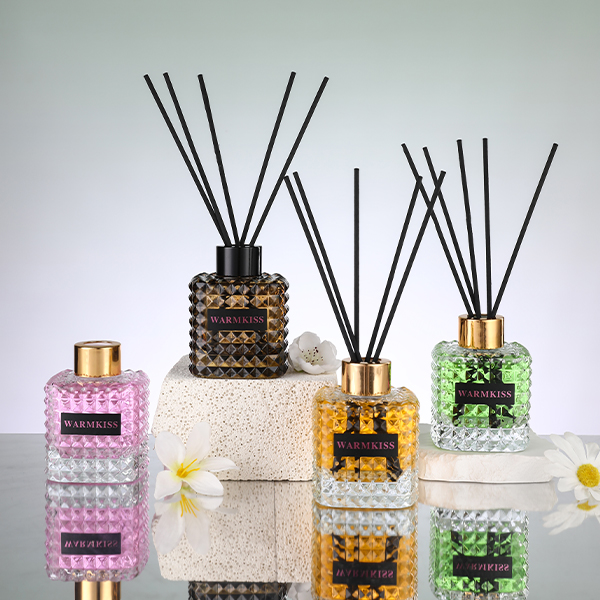
We also recognize that different customers have different purchasing requirements. A regional distributor may prioritize 100ml EDP and larger-volume body fragrance products, while an emerging brand may need coordinated 30ml, 50ml and 100ml bottles. A home-fragrance buyer may require reed diffuser bottles, reeds, closures and retail packaging instead.
Our approach is to discuss the intended market, target product specification and order structure before recommending a manufacturing solution.
Foire aux questions
- How can buyers verify whether a perfume supplier in China is a real manufacturer?
Request a factory visit or live video inspection covering production areas, filling equipment, packaging operations and quality-control facilities. Check the company’s business information, production capacity and actual manufacturing responsibilities.
- What production capacity should a large perfume manufacturer have?
There is no universal capacity threshold. Buyers should compare the factory’s daily output with the order volume, number of SKUs, production schedule and available packaging resources. Capacity figures should be supported by actual production information.
- What fragrance documentation should an OEM manufacturer provide?
Depending on the product and destination, relevant documents may include SDS, COA, IFRA conformity documentation, product specifications, ingredient information and stability records. Requirements should be confirmed for each formula and market.
- Does every alcohol-based perfume require UN1266 dangerous-goods shipping?
No. UN1266 applies to qualifying perfumery products under the relevant transport classification rules. The finished product’s composition, flash point, packaging and shipping mode must be assessed before assigning a transport classification.
- Can buyers use stock perfume bottles to reduce private label costs?
Yes. Selecting existing bottle molds can avoid the cost and development time associated with custom glass molds. Brands can differentiate products through bottle colors, printing, labels, caps and outer cartons.
- What is the difference between perfume OEM and ODM?
OEM generally means manufacturing according to the buyer’s supplied product specifications or approved formula. ODM involves more manufacturer participation in product development, such as fragrance selection, packaging configuration and product specification recommendations.
- Can one Chinese factory manufacture perfume, body mist and reed diffusers?
Some manufacturers have capabilities across these categories. Buyers should verify the relevant formula preparation, filling equipment, packaging compatibility and quality-control procedures for each product rather than assuming that perfume production capacity automatically covers every category.
Conclusion
Choosing a perfume fragrance manufacturer in China should be based on verified manufacturing capacity, fragrance sourcing, quality management, packaging coordination and export experience. Guangdong, Zhejiang and Shandong each offer different supply-chain resources, and the best sourcing location depends on the buyer’s product requirements.
For brands and distributors seeking a long-term OEM/ODM partner, Shandong Aili Cosmetics offers more than 30 years of manufacturing experience, substantial perfume production capacity and product development across perfume, reed diffusers and related consumer-care categories. We believe that transparent specifications, reliable production management and market-specific product development are the foundations of sustainable international cooperation.