
Robertet & Other Fragrance Manufacturer
Robertet – Shandong Aili Cosmétiques‘ main fragrance partner, is not usually included in the fragrance industry’s Big Four, but its leadership in natural raw materials makes it a strategic fragrance partner for premium perfume and OEM manufacturing.
In the global fragrance industry, four companies are commonly regarded as the leading multinational players: Givaudan, dsm-firmenich, IFF, and Symrise. Their scale, global production networks, fragrance ingredients, aroma chemicals, research capabilities, and multinational customer bases make them the industry’s most influential large-scale suppliers.
But there is another name that deserves particular attention: Robertet.
Robertet is generally not included in the industry’s commonly cited “Big Four.” Yet this does not mean it is a minor fragrance supplier. In fact, Robertet has built a highly distinctive position around natural raw materials, fine fragrance, botanical extraction, and premium olfactory creation.
For a perfume manufacturer such as Shandong Aili Cosmetics Co. Ltd., this distinction matters. A fragrance supplier is not selected only according to company size. The quality of natural ingredients, fragrance creativity, formulation performance, product positioning, and the ability to develop differentiated scents can be equally important.
Who Are the Fragrance Industry’s Big Four?
The term “Big Four” is an industry shorthand rather than a formal regulatory classification. It generally refers to four of the world’s largest and most comprehensive fragrance and flavor companies:
| Entreprise | Headquarters | Key Strengths |
| Givaudan | Switzerland | Fragrance, beauty, ingredients, aroma chemicals, global scale |
| dsm-firmenich | Switzerland/Netherlands | Perfumery, ingredients, innovation, aroma molecules |
| IFF | United States | Fragrance, ingredients, flavors, biotechnology |
| Symrise | Germany | Fragrance, aroma molecules, cosmetic ingredients |
Their major advantage is scale and vertical integration. These companies operate across fragrance compounds, ingredients, aroma molecules, research, technology, and global customer service.
For large international consumer-goods companies, this scale provides significant advantages in supply security, technical development, regulatory support, and global production.
However, scale is not the only definition of excellence in perfumery.
Where Does Robertet Fit?
Robertet occupies a different position.
The company itself describes its position as seventh worldwide in the fragrance and flavor industry and the global leader in natural raw materials. Its 2025 revenue reached approximately €843.9 million, significantly smaller than the largest multinational fragrance groups.
This makes Robertet better understood as a major specialist fragrance house rather than a member of the Big Four.
| Dimension | Big Four | Robertet |
| Overall scale | Extremely large | Large specialist |
| Global industrial footprint | Very extensive | International but more focused |
| Aroma chemicals | Major capability | Strong, but not the core identity |
| Natural raw materials | Important | Strategic core strength |
| Fine fragrance | Very strong | Particularly distinctive |
| Botanical extraction | Strong | One of its signature advantages |
| Premium/niche fragrance | Important growth area | Particularly strong positioning |
This difference is important for perfume manufacturers because two fragrance houses with similar technical capabilities may produce very different creative and commercial results.
Why Robertet Has a Special Position in Natural Fragrance
Robertet’s competitive identity is closely connected with natural ingredients.
The company has more than two centuries of history working with natural materials and has developed expertise in transforming botanical raw materials into ingredients for fragrances, flavors, health, and beauty applications.
Its natural-material capabilities include extraction and processing technologies designed to preserve the olfactory characteristics of botanical materials. Robertet has also expanded its supercritical CO₂ extraction capabilities through its acquisition of Phasex in the United States.
This matters because the demand for natural and premium fragrance experiences continues to influence the development of fine fragrance and niche perfume.
Natural ingredients do not automatically make a perfume better. A successful fragrance still requires balance, stability, dosage control, formulation expertise, and commercial positioning. But access to high-quality natural materials can give perfumers another important dimension when developing a distinctive scent.
Why Aili Cosmetics Works With Robertet, Givaudan and Symrise
À Shandong Aili Cosmetics Co. Ltd., fragrance selection is not based simply on choosing the largest supplier.
Our fragrance-material cooperation is centered primarily on Robertet, with additional cooperation involving Givaudan and Symrise. The reason is straightforward: different fragrance houses bring different strengths to perfume development.
For Aili, Robertet’s natural-fragrance expertise is particularly valuable when developing products that emphasize natural olfactory character, premium positioning, or more sophisticated fragrance profiles.
At the same time, cooperation with major international fragrance houses such as Givaudan and Symrise gives Aili access to broader creative resources, technical capabilities, and fragrance development experience.
This multi-supplier approach is also practical from a manufacturing perspective. A professional perfume OEM/ODM manufacturer in China should not depend on a single fragrance source for every product.
Instead, fragrance selection should match the target market, product category, price level, scent profile, packaging concept, and expected consumer experience.
What This Means for Private Label Perfume Development
For overseas buyers, the choice of fragrance supplier can directly affect the final perfume.
A private label perfume project may require very different solutions depending on whether the customer is developing an affordable everyday fragrance, a Middle Eastern-inspired perfume, a premium women’s fragrance, a men’s Eau de Parfum, or a niche fragrance collection.
Aili’s approach is therefore not simply to provide a “Chinese perfume formula.”
Our private label perfume and custom fragrance development process can connect fragrance selection with bottle design, packaging, fragrance concentration, product positioning, and manufacturing requirements.
| Buyer Requirement | Relevant Fragrance Consideration |
| Affordable mass-market perfume | Cost-performance and formulation stability |
| Premium perfume | High-quality fragrance materials and refined composition |
| Natural-positioned fragrance | Botanical ingredients and natural olfactory profile |
| Middle Eastern perfume | Oud, amber, musk, oriental and richer accords |
| Niche fragrance | More distinctive and recognizable scent direction |
| Private label collection | Consistent fragrance identity across multiple SKUs |
This is where the relationship between a fragrance manufacturer and a perfume OEM factory prend de l'importance.
The fragrance house creates the olfactory solution; the perfume manufacturer must then turn that solution into a stable, scalable, compliant commercial product.
Why Natural Fragrance Is Becoming More Important
The growing interest in natural ingredients does not mean synthetic aroma chemicals are disappearing.
Modern perfumery depends on both natural and synthetic materials. Synthetic molecules provide stability, consistency, performance, availability, and creative possibilities that natural materials alone cannot always provide.
The real trend is therefore not “natural versus synthetic.”
It is better combinations of natural materials, aroma molecules, formulation technology, and creative perfumery.
For Chinese perfume manufacturers targeting Europe, North America, the Middle East, Southeast Asia, and Latin America, this balance can become increasingly important as consumers and brands seek more distinctive fragrance stories.
Aili’s Position: Manufacturing Strength Plus International Fragrance Resources
For Aili, international fragrance cooperation is part of a broader manufacturing system.
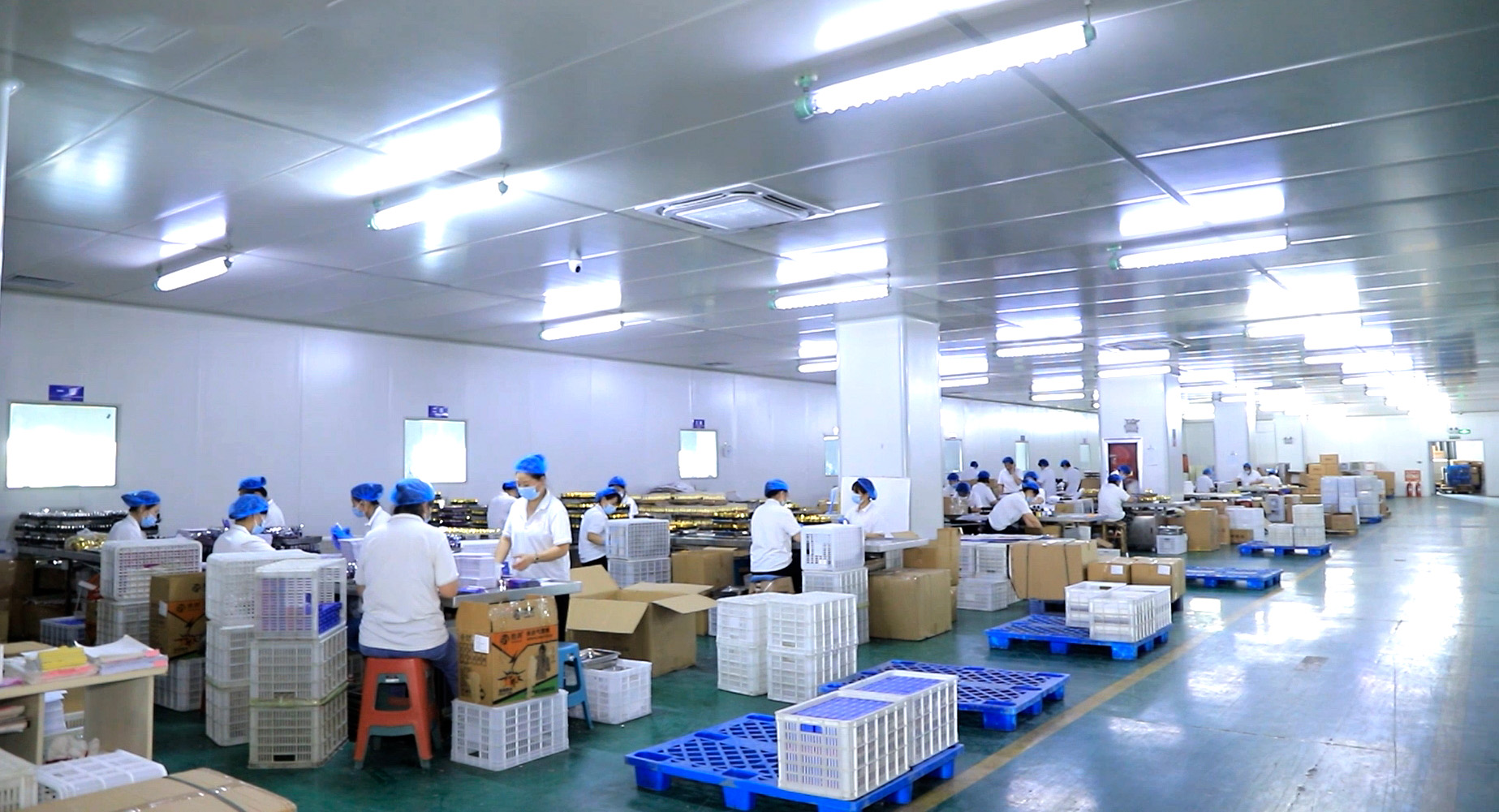
With more than 30 years of perfume manufacturing experience, Aili has developed capabilities covering perfume OEM/ODM, private label perfume, fragrance development, packaging, filling, and large-scale production.
The company operates 48 perfume production lines and has production capacity exceeding 300,000 bottles per day. This allows fragrance concepts developed with international fragrance suppliers to be translated into commercially scalable products.
For overseas brands, distributors, and importers, this combination can be more valuable than simply finding the largest fragrance company.
The real question is:
Can the fragrance concept be transformed into a stable, attractive, compliant, and commercially viable finished product?
That is ultimately where a professional perfume OEM manufacturer creates value.
Foire aux questions
Is Robertet one of the Big Four fragrance companies?
No. The industry commonly uses “Big Four” to describe Givaudan, dsm-firmenich, IFF, and Symrise. Robertet is generally positioned separately and is known particularly for natural raw materials and fine fragrance.
Is Robertet a major fragrance manufacturer?
Yes. Robertet is a major international fragrance and flavor company. It reports itself as seventh worldwide in the fragrance and flavor industry and a global leader in natural raw materials.
What makes Robertet different from Givaudan and Symrise?
Robertet has a particularly strong identity in natural raw materials, botanical extraction, and fine fragrance. Givaudan and Symrise operate on a much broader multinational industrial scale across fragrance, ingredients, and related technologies.
Does Aili Cosmetics use Robertet fragrance materials?
Aili’s fragrance cooperation is primarily with Robertet, with additional cooperation involving Givaudan and Symrise. This supports different fragrance-development requirements across its perfume OEM and private label projects.
Are natural fragrance ingredients always better than synthetic ingredients?
No. High-quality perfumery normally combines natural and synthetic materials. The best formulation depends on the desired scent, stability, performance, cost, regulations, and target market.
Why should a private label perfume buyer care about the fragrance supplier?
The fragrance supplier can influence the perfume’s scent quality, originality, stability, positioning, and development possibilities. Therefore, fragrance sourcing is an important part of choosing a private label perfume manufacturer.
Can a Chinese perfume OEM factory work with international fragrance houses?
Yes. A capable Chinese perfume OEM factory can integrate international fragrance solutions with local manufacturing, filling, packaging, quality control, and private label production.
Conclusion
Robertet may not belong to the industry’s commonly cited Big Four, but that does not make it a second-tier fragrance supplier.
Its position is different rather than simply smaller: the Big Four represent enormous global scale and integrated technology, while Robertet has built a particularly strong identity around natural raw materials, fine fragrance, and premium olfactory creation.
For Aili Cosmetics, this difference is commercially meaningful.
Our cooperation with Robertet, together with Givaudan and Symrise, gives Aili access to different areas of international fragrance expertise while our own manufacturing system converts those fragrance solutions into finished perfumes and consumer products.
For today’s private label perfume buyers, fragrance brands, and international distributors, the better question is not simply “Which fragrance company is the biggest?”
It is:
Which combination of fragrance expertise, natural ingredients, formulation capability, manufacturing capacity, and market understanding can create the right product for the target consumer?
That is the standard Aili applies to modern perfume OEM/ODM manufacturing.