
Iran Perfume Market: Opportunities for Chinese Manufacturers
Explore Iran’s perfume market, demand for affordable fragrances, sourcing challenges, and compliant Perfume OEM/ODM opportunities with Компания «Шандун Айли Косметикс».
The Gulf Cooperation Council (GCC) countries are important destinations for international fragrance brands, but entering these markets can be challenging for new suppliers. Established regional brands, international luxury labels, experienced distributors, and strong retail networks create intense competition. For Chinese manufacturers, competing on price alone is rarely enough.
Iran deserves a closer look. With a population of approximately 92.4 million in 2025, according to World Bank data, it represents a substantial potential consumer market. Its long-standing fragrance culture, demand for affordable consumer products, and existing commercial links with China make it worth evaluating for suitable perfume suppliers.
В Shandong Aili Cosmetics Co., Ltd., we believe the opportunity lies in understanding local purchasing power and developing fragrances that balance appealing scent profiles, consistent quality, and realistic retail prices. However, Iran is not a simple alternative to the GCC. Economic volatility, international sanctions, payment restrictions, import requirements, and logistics uncertainty must all be considered before entering the market.
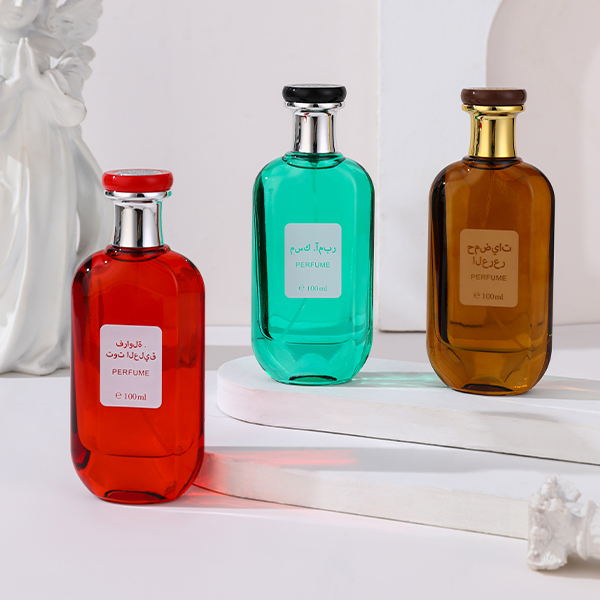
Why Iran Deserves More Attention from Chinese Perfume Manufacturers
A large population creates a broad potential customer base
Iran’s population exceeded 92 million in 2025. This scale creates potential demand across different consumer segments, from affordable everyday perfumes to gift products and more premium fragrances.
Population alone, however, does not determine market size. Household purchasing power, inflation, currency movements, retail prices, and the availability of imported products all influence actual sales. For Chinese exporters, the practical question is not simply how many people live in Iran, but how many consumers can afford a particular product at its final retail price.
This makes market segmentation essential. Affordable eau de parfum, body sprays, gift sets, and selected private-label fragrances may serve different customer needs. Importers should validate these opportunities through local distributor interviews, retail-price checks, and small-scale market testing.
Fragrance culture supports product differentiation
Iran has a long history of fragrance use, and consumers may have varied preferences for floral, woody, musky, oriental, and fresh fragrance profiles. Preferences differ by age, region, occasion, and individual taste, so exporters should avoid treating the entire country as one uniform market.
For Chinese perfume manufacturers, this creates a reason to offer flexible product development rather than a fixed catalogue alone. A distributor may want accessible daily fragrances, while another may focus on gift packaging or products with richer, longer-lasting scent profiles.
The right strategy begins with sample evaluation and local feedback—not assumptions about what every Iranian consumer prefers.
Why Affordable and Private-Label Perfumes May Have Potential
Economic pressure can make price-to-performance an important purchasing consideration. When imported luxury products become expensive or difficult to obtain, some consumers may consider lower-priced alternatives. However, this does not mean that all Iranian consumers are trading down or that demand for affordable fragrances is guaranteed to increase.
The opportunity for Chinese suppliers is to offer a credible alternative based on product quality and commercial value.
Three approaches deserve consideration:
Affordable branded fragrances: Products designed for accessible retail price points, with attractive packaging and clearly defined product positioning.
Private-label perfume: Products developed for Iranian importers or local brands that want to build their own identity.
Flexible product assortments: Carefully selected fragrances and packaging formats that allow distributors to test demand before committing to a broader range.
A successful fragrance alternative should compete on its own merits. Buyers should evaluate scent development, packaging quality, spray performance, consistency, and price rather than relying on claims that a product is identical to a famous luxury perfume.
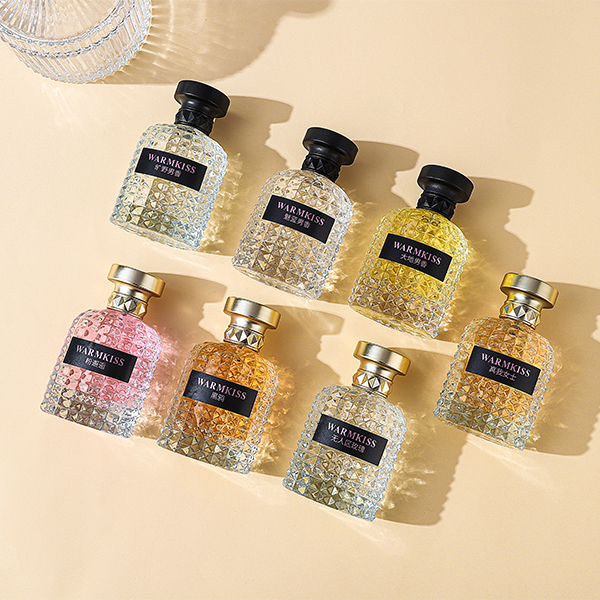
Iran vs. GCC: Two Different Market-Entry Strategies
The GCC and Iran should not be treated as interchangeable fragrance markets. The GCC offers established international trade hubs and a diverse mix of premium and mass-market customers, while Iran presents a large consumer base alongside more significant sanctions-related and financial constraints.
| Фактор | GCC markets | Iran |
| Consumer market | Varies substantially by country; includes premium and mass-market segments | Large population with diverse purchasing power |
| Competition | Established regional brands, international labels, and distributors | Local brands, imported products, and domestic alternatives |
| Price positioning | Premium and affordable segments both matter | Affordability and final retail price require careful evaluation |
| Market access | Country-specific registration and import requirements | Additional sanctions, banking, and trade-compliance considerations |
| Recommended approach | Distributor partnerships and differentiated positioning | Thorough compliance checks, local validation, and controlled market testing |
Neither market is universally easier. Iran may offer an attractive opportunity for selected product categories, but a large population does not automatically translate into accessible demand or straightforward payment collection.
How Shandong Aili Cosmetics Can Support Fragrance Buyers
Shandong Aili Cosmetics Co., Ltd. has more than 30 years of manufacturing experience, dating back to 1993. We provide perfume manufacturing, private-label development, and OEM/ODM services for international customers.
Our approach is to help buyers match product specifications with their intended market, budget, and distribution model.
Flexible product development
For an importer exploring Iran, we can discuss fragrance selection, bottle and packaging options, and private-label requirements according to the project’s scope. Rather than developing a large assortment immediately, buyers can begin with a focused range of samples and identify which products best fit their target retail prices.
Manufacturing capacity and repeat-order planning
Company-provided production information includes 48 perfume production lines and capacity exceeding 300,000 perfume bottles per day. These figures refer to perfume production, and actual capacity available for a particular order depends on specifications, packaging, production scheduling, and confirmed requirements.
For distributors, manufacturing capability matters most when it supports repeatable specifications, planned replenishment, and clear communication. A product that sells well in a market test must also be commercially practical to reorder.
Product value rather than unsupported luxury claims
We believe an affordable perfume should be evaluated on its own merits. A well-developed fragrance, suitable packaging, reliable manufacturing, and a realistic cost structure can help a brand compete without copying another brand’s identity or making unsupported claims about ingredient equivalence.
For Iranian buyers, the goal should be to build a sustainable product range with a clear value proposition—not merely to offer the lowest initial quotation.
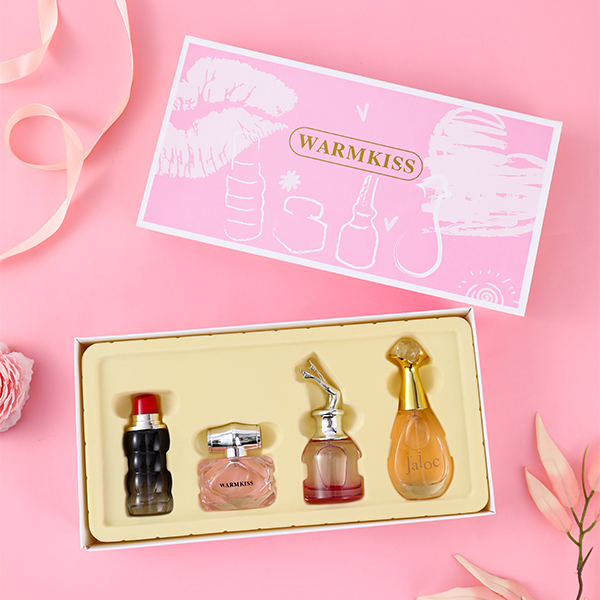
The Main Challenges: Sanctions, Payments, and Import Compliance
Iran’s commercial potential must be assessed alongside its operating risks. International sanctions may restrict particular parties, banks, transactions, goods, or services. Requirements depend on the jurisdictions involved, the identities of the parties, the product classification, and the transaction structure.
Before accepting an order, both supplier and buyer should conduct appropriate sanctions screening and obtain qualified advice on export controls, banking arrangements, customs requirements, and product regulations.
Payment channels should be verified with authorized financial institutions. Businesses should not assume that using a third-country intermediary, a different currency, or a transshipment route automatically makes a transaction permissible. False declarations, concealed parties, or misleading origin documents can create serious legal and commercial risks.
Importers should also confirm applicable product registration, labeling, ingredient, and documentation requirements before production or shipment. Alcohol-based perfumes may face additional transport restrictions depending on their composition and classification.
At Aili, we consider compliance and clear documentation part of responsible international business. A market opportunity is only commercially meaningful if the transaction can be completed lawfully, paid for reliably, and delivered under workable conditions.
A Practical Market-Entry Plan for Iranian Perfume Buyers
A phased approach can help businesses limit exposure while learning about the market.
Stage 1: Validate local demand. Interview potential distributors, review competing products, compare retail prices, and identify suitable fragrance categories.
Stage 2: Evaluate samples and economics. Assess fragrance performance, packaging, target retail prices, expected margins, and minimum order quantities.
Stage 3: Complete compliance checks. Confirm the buyer, transaction, payment route, shipping arrangements, and destination-market requirements before committing to production.
Stage 4: Begin with a controlled order. Where the transaction is lawful and commercially feasible, test a focused range and gather feedback before expanding the assortment.
Stage 5: Build repeatable supply. Use sales data, approved product specifications, and realistic replenishment schedules to guide subsequent orders.
This process does not remove market risk, but it helps replace assumptions with evidence.

Часто задаваемые вопросы
1. Is Iran a promising market for Chinese perfume manufacturers?
Iran’s population and established fragrance culture make it worth evaluating. Commercial success still depends on purchasing power, competitive pricing, local demand, regulatory requirements, and the feasibility of payment and delivery.
2. Why consider Iran instead of focusing only on GCC countries?
Iran offers a different market profile and a large population. However, it also presents more significant sanctions and payment considerations. Exporters should compare markets by actual commercial feasibility rather than assuming Iran is easier to enter.
3. Is there demand for affordable alternatives to luxury perfume in Iran?
There may be demand among consumers seeking attractive fragrances at accessible prices. Importers should verify this through local research and sample testing rather than assuming all consumers prefer lower-priced alternatives.
4. Can Shandong Aili Cosmetics develop private-label perfume for Iranian buyers?
Aili offers perfume manufacturing and OEM/ODM services. Product scope, customization, order quantities, and production schedules depend on the project and must be assessed alongside applicable trade and import requirements.
5. What should Iranian importers consider before placing an order?
They should assess product quality, target retail prices, landed costs, minimum order quantities, payment reliability, shipping feasibility, product documentation, and all relevant sanctions and import requirements.
6. Can third-country payment or transit automatically solve Iran trade restrictions?
No. A different payment currency, intermediary, or shipping route does not automatically make a transaction compliant. The parties, goods, services, financial institutions, and jurisdictions involved must be assessed under applicable rules.
7. How should a Chinese perfume supplier begin developing the Iranian market?
A sensible starting point is to identify qualified local buyers, validate retail demand, evaluate a focused sample range, calculate realistic costs, and complete compliance checks before accepting an order.
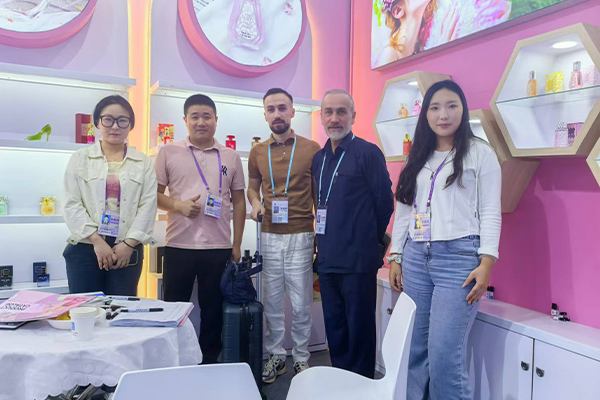
Conclusion: A Potential Market That Requires More Than a Low Price
Iran deserves attention in a broader Middle East fragrance strategy because of its substantial population, established fragrance culture, and potential demand for products across different price segments. For Chinese manufacturers, affordable private-label perfumes may offer a route to differentiation when the product matches local preferences and purchasing power.
But the opportunity should not be confused with a guaranteed sales boom. Economic pressure, currency volatility, sanctions, payment restrictions, and import requirements can make market entry more complicated than the headline population figure suggests.
At Shandong Aili Cosmetics, we believe the strongest approach is to combine suitable fragrance development, dependable manufacturing, transparent commercial terms, and careful compliance review. By validating demand before scaling up, Chinese perfume manufacturers and Iranian buyers can assess whether a long-term partnership is commercially realistic—and build it on a stronger foundation than price alone.