
Reflections on the Perfume Industry After the Canton Fair & Hong Kong Asia-Pacific Beauty Expo
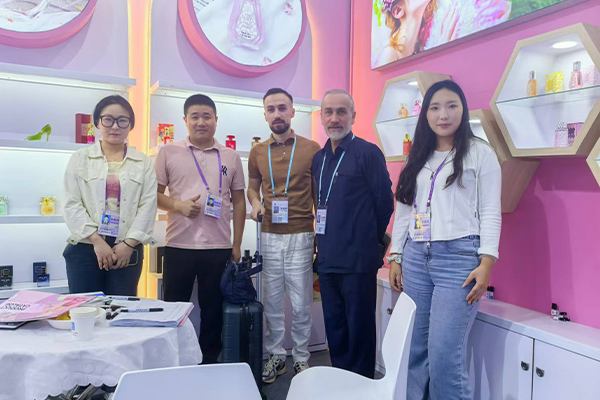
After participating in the 136th Canton Fair and the 2024 Hong Kong Asia-Pacific Beauty Expo, Shandong Aili Cosmetics Co., Ltd. gained a deeper understanding of the current perfume industry, international buyer demand, product presentation, and the challenges of developing overseas fragrance markets.
As a professional perfume manufacturer and perfume factory in China, we found that the two exhibitions attracted very different types of buyers. The Canton Fair provided more opportunities to meet professional international buyers, while the Hong Kong exhibition had fewer serious perfume buyers.
More importantly, these exhibitions showed us that having good perfume products is not enough. Product selection, bottle design, packaging, fragrance performance, pricing, communication, and customer follow-up all influence the success of international perfume business.
After attending the 136th Canton Fair and the Hong Kong Asia Pacific Beauty Expo, I gained some insights into the current state of the perfume industry and also a deeper understanding of the outcomes of both exhibitions.
First, regarding the Canton Fair, the quality of perfume buyers seemed to be quite high. Most were legitimate foreign buyers, many of whom owned their own brands. Looking at the visitors to our booth, the majority of perfume buyers came from the Middle East and Africa, followed by Southeast Asia, with only a few from Europe and the U.S. In conversations, most visitors were attracted to our booth because we are a perfume factory, and they had more interest in customized fragrances than in ready-made stock. They didn’t show much interest in our existing perfumes, mainly because the sample selection did not meet their expectations. There were issues with how the products were arranged and the color schemes, and the bottle designs and fragrance longevity were more suited to Southeast Asian tastes. For European and Middle Eastern buyers, our bottle designs didn’t capture their attention. Despite having the same booth size and decoration as others, our perfumes appeared somewhat plain, as we lacked matching packaging boxes. Packaging and bottles should complement each other, but the single bottles on our display were too simple. In contrast, other booths had packaging that was a bit more elegant, enhancing the visual appeal of the perfume and drawing more attention. Additionally, most of our perfume bottles were smaller (50ml), but many foreign clients preferred larger sizes, something I particularly noticed at the Asia Pacific Beauty Expo.
However, the majority of visitors to our booth were interested in custom perfumes. They had their own brands, specific fragrance preferences, bottle designs, and wanted specific scent longevity. Many were drawn in by our factory’s promotional materials.
This exhibition taught me a lot. For example, when talking to clients, it’s important to focus on what interests them and highlight our factory’s strengths, such as our fast delivery and competitive prices. Establishing trust and showing sincerity is essential for leaving a positive impression. Another key takeaway is the importance of being confident when speaking with clients. Confidence comes from understanding our products and believing in their quality. When discussing our perfumes, we need to reassure clients by answering their concerns clearly and showing that we have the expertise and confidence to meet their needs. Improving our own knowledge of the products will also make conversations smoother and more professional, which is essential to keeping clients engaged. If we make them wait too long or seem uncertain, they may lose interest and leave. Effective communication lays the foundation for progressing to the next step in business negotiations.
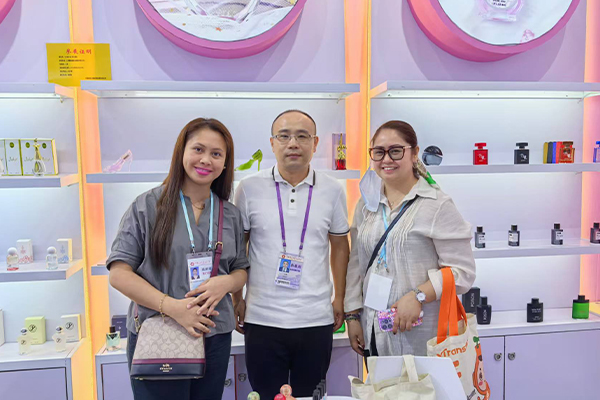
Another important issue that came up was quoting prices on the spot. Many clients wanted to know prices immediately for both ready-made perfumes (Eau de Toilette, Eau de Parfum) and customized fragrances. The first step is to clarify if they’re interested in custom products, then price accordingly. Pricing should be balanced—too low and the factory might lose money, too high and the client may lose interest. Knowing the client’s country is also important, as it allows for more accurate pricing. It’s crucial to collect business cards and contact details, like phone numbers and emails, to stay in touch. Many clients only added us on WeChat or WhatsApp, but WeChat responses were generally slower, and sending multiple messages yielded only a few replies.
In the end, we collected the customer information we expected, but the real challenge lies in following up. Many clients only had brief conversations and exchanged contact details, and they may not remember us afterward.
At the Hong Kong Asia Pacific Beauty Expo, the results were far less impressive than at the Canton Fair. Over the three days, most of the visitors seemed to be from Japan, Korea, and other Asian countries, with very few from Europe or the Middle East. Across from our booth was a perfume display from Dubai, and nearby was a booth from Guangdong. When comparing the products and sample selection, our booth didn’t stand out much. Other perfume displays, like those from Dubai, had fragrances and bottle designs that better appealed to international clients. Their packaging was quite similar to ours but was arranged in a more appealing and elegant way, with a larger variety of samples. Our booth, on the other hand, lacked attention to detail in packaging, with many makeshift labels and damaged packaging, which made the display less attractive. We also didn’t seem to attract many serious buyers. Most visitors were local traders, particularly from Guangdong, looking to purchase products for resale abroad. There were very few legitimate perfume buyers at the exhibition. Overall, the quality of the visitors seemed lower than at the Canton Fair.
What Did We Learn from the 136th Canton Fair?
The quality of perfume buyers at the Canton Fair was generally high.
Most visitors who came to our booth appeared to be professional foreign buyers, and many already had their own perfume or fragrance brands.
From our observations, the largest groups of perfume buyers came from the Middle East and Africa, followed by Southeast Asia. We saw relatively fewer buyers from Europe and the United States.
This provided us with useful information about the geographical distribution of demand for our perfume and fragrance products.
Another important finding was that many buyers were more interested in custom perfume manufacturing than in purchasing our existing ready-made products.
Why Were International Buyers Interested in Custom Perfume?
Many visitors to our booth already had their own brands and clear ideas about their products.
They often had specific requirements for:
- Fragrance profiles
- Bottle design
- Packaging
- Perfume concentration
- Fragrance longevity
- Product size
- Target price
- Market positioning
Instead of simply purchasing existing stock, these buyers wanted to develop custom perfume, private-label fragrance, and OEM/ODM perfume products.
This confirmed an important direction for our international business.
As a perfume factory, our manufacturing capabilities can provide greater value when we help customers develop products according to their own brand requirements.
What Problems Did We Find in Our Perfume Product Display?
Although many customers were interested in our factory, we also recognized several weaknesses in our product presentation.
Our existing perfume samples did not fully meet the expectations of some international buyers.
The problems included product arrangement, color coordination, bottle design, packaging, and sample selection.
Our perfume bottles were generally simple, and many of them were displayed without matching packaging boxes.
For perfume products, the bottle and packaging should work together.
A beautiful perfume bottle can attract attention, but an attractive box and complete packaging can further communicate the product’s positioning and brand value.
Compared with some other exhibitors, our display appeared relatively plain because we did not provide enough coordinated packaging.
Why Are Perfume Bottles and Packaging Important?
Our exhibition experience showed us that perfume packaging is an important part of international product development.
Perfume is a highly visual consumer product. Before customers smell the fragrance, they often see the bottle, box, label, and overall display.
For international buyers, packaging can communicate:
- Brand positioning
- Product quality
- Target consumer group
- Price level
- Market style
- Cultural characteristics
For example, a bottle design that works well in one regional market may not necessarily attract buyers from the Middle East or Europe.
Therefore, perfume manufacturers need to consider the target market when developing bottles and packaging.
Are 50ml Perfume Bottles Suitable for All Markets?
Another observation from the exhibitions was product size.
Many of our perfume products were approximately 50ml, but we noticed that some international customers preferred larger perfume bottles.
This was particularly noticeable at the Hong Kong Asia-Pacific Beauty Expo.
This does not mean that 50ml perfume is unsuitable for international markets. Instead, it shows that different markets and customer groups may have different preferences.
For a private-label perfume manufacturer, offering several bottle sizes can provide greater flexibility.
Depending on the target market, customers may consider different specifications such as 30ml, 50ml, 75ml, 100ml, or other customized sizes.
The final choice should be based on consumer preferences, product positioning, distribution channels, and target price.
What Did Perfume Buyers Want from Our Factory?
One of the most encouraging findings was that customers were attracted by our identity as a perfume manufacturer.
Many visitors noticed our factory-related promotional materials and wanted to learn more about our manufacturing capabilities.
They were particularly interested in whether we could produce fragrances according to their own requirements.
This included both modern fragrance categories such as Eau de Parfum (EDP) and Eau de Toilette (EDT) and customized fragrance products.
For us, this confirmed that our factory capability is an important competitive advantage in international B2B perfume business.
What Should We Focus on When Talking to Perfume Buyers?
The exhibitions also provided valuable lessons about international sales communication.
When communicating with customers, we should first understand what they are interested in rather than simply introducing every product we have.
For example, if a buyer is looking for private-label perfume, the conversation should focus on fragrance development, packaging, bottles, MOQ, pricing, production time, and customization.
If a buyer is interested in ready-made Eau de Parfum or Eau de Toilette, we should focus on product specifications, fragrance selection, packaging, price, and delivery.
Understanding the customer’s needs allows us to provide more relevant information and makes communication more efficient.
Why Is Confidence Important in Perfume Sales?
Confidence is another important factor in face-to-face communication.
When buyers ask questions about fragrance formulation, perfume longevity, packaging, production capacity, or delivery time, our sales team needs to respond clearly and professionally.
Confidence comes from product knowledge.
The better we understand our perfume products and manufacturing capabilities, the easier it is to answer customer questions and establish trust.
If a customer has to wait too long for an answer or feels that the salesperson is uncertain, they may quickly lose interest.
Therefore, continuous product training is essential for our foreign trade team.
How Should a Perfume Factory Quote Prices at an Exhibition?
Price was another important issue during the Canton Fair.
Many buyers wanted to know the price immediately, whether they were interested in ready-made perfume products or customized fragrances.
For Eau de Parfum, Eau de Toilette, and custom perfume, pricing should be based on the actual product requirements.
Before providing a customized quotation, we should understand:
- Whether the customer wants ready-made or customized perfume.
- The target market and country.
- Product size.
- Bottle and packaging requirements.
- Fragrance requirements.
- Expected order quantity.
- Private-label requirements.
- Delivery requirements.
A quotation needs to balance competitiveness and profitability.
A price that is too low may make the project difficult for the factory, while a price that is too high may cause the customer to lose interest.
Understanding the customer’s market and requirements therefore helps us provide a more appropriate quotation.
Why Is the Customer’s Country Important When Quoting Perfume?
Different markets have different product positioning, packaging requirements, purchasing power, distribution channels, and competitive environments.
Knowing the customer’s country helps us better understand the potential market position of the perfume.
For example, a buyer developing a premium perfume brand for the Middle East may require different packaging and bottle designs from a buyer selling affordable fragrance products in Southeast Asia.
Therefore, the country and target market should be considered when discussing perfume OEM pricing and product development.
Why Is Customer Follow-Up So Important?
Collecting customer information at an exhibition is only the beginning.
At the Canton Fair, we collected a significant number of customer contacts. However, many conversations were relatively short.
A customer may visit a booth, exchange a business card, add a WhatsApp or WeChat contact, and then leave.
After several days, the customer may not clearly remember every supplier they met.
This makes timely follow-up extremely important.
Our foreign trade team needs to organize customer information after each exhibition and contact buyers according to their actual requirements.
Useful customer information includes:
- Company name
- Contact person
- Country
- Phone number
- Product requirements
- Fragrance preferences
- Packaging requirements
- Expected order quantity
- Target price
The more complete the information, the easier it is to continue the conversation.
What Did We Learn About WeChat and WhatsApp?
During the exhibitions, some customers preferred adding us through WeChat or WhatsApp rather than exchanging detailed emails.
We found that WeChat follow-up sometimes generated fewer responses than expected, particularly when multiple messages were sent without receiving a reply.
This taught us that international customer follow-up should not rely on a single communication channel.
Depending on the customer and market, we can use:
- Phone calls
- Product catalogs
- Samples
- Online meetings
The key is to provide useful information rather than repeatedly sending messages without understanding the customer’s needs.
How Was the Hong Kong Beauty Expo Different?
Our experience at the Hong Kong Asia-Pacific Beauty Expo was considerably different from the Canton Fair.
During the three-day exhibition, many visitors appeared to come from Japan, South Korea, and other Asian markets.
We saw relatively few serious perfume buyers from Europe and the Middle East.
Compared with the Canton Fair, the overall quality of potential perfume buyers seemed lower from our perspective.
This difference helped us better understand why exhibition selection is important for a Chinese perfume manufacturer seeking international B2B customers.
What Did We Learn from Other Perfume Exhibitors?
The Hong Kong exhibition also gave us an opportunity to compare our products with other perfume displays.
A perfume exhibitor from Dubai was located opposite our booth, while another perfume booth from Guangdong was nearby.
Compared with these displays, we realized that our product presentation could be improved.
Some competing perfume displays had:
- More fragrance samples
- More diverse bottle designs
- Better product arrangement
- More attractive packaging
- More consistent labels
- A stronger overall visual effect
Their products attracted attention partly because the entire display looked more complete.
This showed us that product presentation is not simply decoration. It is part of perfume marketing.
What Improvements Should Aili Cosmetics Make?
Based on the two exhibitions, we identified several areas for improvement.
Improve Perfume Sample Selection
Our samples should better reflect the preferences of different international markets.
We need to develop a more diverse selection of fragrance products for the Middle East, Africa, Southeast Asia, Europe, and other markets.
Improve Bottle Design
We need more attractive and market-oriented perfume bottle options, especially for customers looking for premium or distinctive private-label products.
Improve Packaging
Perfume bottles should be displayed together with suitable boxes whenever possible.
The bottle, box, label, and fragrance should create a consistent product image.
Offer More Product Sizes
Because international buyers showed interest in larger bottles, we should consider expanding the available size options for selected perfume products.
Improve Product Display
A professional perfume booth should make it easy for buyers to understand the product range.
Sample arrangement, color coordination, lighting, packaging, and product classification all deserve greater attention.
What Does This Mean for Our Perfume OEM/ODM Business?
The biggest lesson from these exhibitions is that custom perfume manufacturing represents an important opportunity for Shandong Aili Cosmetics.
Many international buyers already have their own brands and understand what they want.
They need a reliable perfume manufacturer that can turn their ideas into finished products.
This creates opportunities for:
- Custom perfume
- Private-label perfume
- Eau de Parfum OEM
- Eau de Toilette OEM
- Custom fragrance development
- Customized perfume bottles
- Customized perfume packaging
- Fragrance product development
Our future product strategy should therefore place greater emphasis on flexible customization rather than relying only on ready-made perfume products.
What Is the Role of Home Fragrance and Aroma Products?
The fragrance market is also expanding beyond personal perfume.
In addition to traditional perfume, Eau de Parfum, and Eau de Toilette, fragrance brands can consider products such as:
- Home fragrance
- Room fragrance
- Reed diffuser
- Aroma diffuser
- Fragrance oil
- Scented products
For customers interested in developing a complete fragrance portfolio, personal perfume and home fragrance products can complement each other.
This provides another potential direction for our future international product development.
Our Reflections on the International Perfume Market
The two exhibitions gave us a more realistic understanding of the international perfume business.
The global market is not simply about producing perfume and finding buyers.
A successful fragrance product needs to combine:
Fragrance + Bottle + Packaging + Market Positioning + Price + Customer Service + Manufacturing Capability.
A professional perfume factory needs to understand all of these elements.
The Canton Fair showed us that there is strong interest in custom fragrance and private-label perfume manufacturing, especially among international buyers with their own brands.
The Hong Kong exhibition, meanwhile, reminded us that exhibition selection and product presentation can have a major influence on business results.
Frequently Asked Questions About Our Perfume Industry Insights
1. What did Aili Cosmetics learn from the 136th Canton Fair?
We found that the Canton Fair attracted many professional international perfume buyers, particularly buyers from the Middle East, Africa, and Southeast Asia. Many were more interested in custom perfume and private-label fragrance than ready-made products.
2. What types of perfume did international buyers request?
Many buyers had specific requirements for fragrance profiles, bottle design, packaging, fragrance longevity, product sizes, and target prices. They were interested in developing customized fragrance products for their own brands.
3. Why is perfume packaging important for international buyers?
Packaging influences the first impression of a perfume. A coordinated perfume bottle, box, label, and product display can make a fragrance product look more professional and attractive.
4. What is the difference between custom perfume and ready-made perfume?
Ready-made perfume uses an existing product and formulation, while custom perfume is developed according to the customer’s requirements. Custom projects can involve fragrance, bottle, packaging, labeling, and product positioning.
5. Can Aili Cosmetics manufacture Eau de Parfum and Eau de Toilette?
Yes. As a professional perfume manufacturer, Aili Cosmetics can provide fragrance products including Eau de Parfum (EDP) and Eau de Toilette (EDT), as well as customized fragrance solutions.
6. How should buyers choose a perfume manufacturer in China?
Buyers should consider manufacturing experience, product quality, customization capabilities, production capacity, packaging options, communication, delivery capability, and the supplier’s ability to support long-term cooperation.
7. What are the main challenges in international perfume sales?
Important challenges include understanding local fragrance preferences, selecting suitable products, providing competitive prices, presenting attractive packaging, communicating professionally, and following up with customers effectively after exhibitions.
8. Does Aili Cosmetics produce home fragrance and aroma diffuser products?
Aili Cosmetics is also developing fragrance product categories beyond personal perfume, including home fragrance, room fragrance, reed diffuser, aroma diffuser, and other scented products, providing opportunities for customers seeking broader fragrance portfolios.
Conclusion
Participating in the 136th Canton Fair and the Hong Kong Asia-Pacific Beauty Expo gave Shandong Aili Cosmetics Co., Ltd. valuable practical experience in international perfume and fragrance business development.
The Canton Fair demonstrated strong interest in custom perfume, private-label fragrance, Eau de Parfum, and Eau de Toilette manufacturing, particularly from buyers with their own brands.
The Hong Kong exhibition provided a different experience and helped us identify weaknesses in product selection, perfume bottle design, packaging, sample presentation, and exhibition strategy.
For us, these lessons are valuable.
In the future, Shandong Aili Cosmetics will place greater emphasis on market-oriented fragrance development, attractive perfume packaging, customized bottle options, professional product presentation, competitive pricing, and efficient customer follow-up.
As a professional perfume factory and fragrance manufacturer in China, we will continue to develop custom perfume, OEM/ODM fragrance, private-label perfume, Eau de Parfum, Eau de Toilette, home fragrance, aroma diffuser, and other fragrance products.
Our goal is not simply to meet customers at exhibitions, but to turn these meetings into long-term partnerships and provide international fragrance brands with reliable manufacturing solutions.