
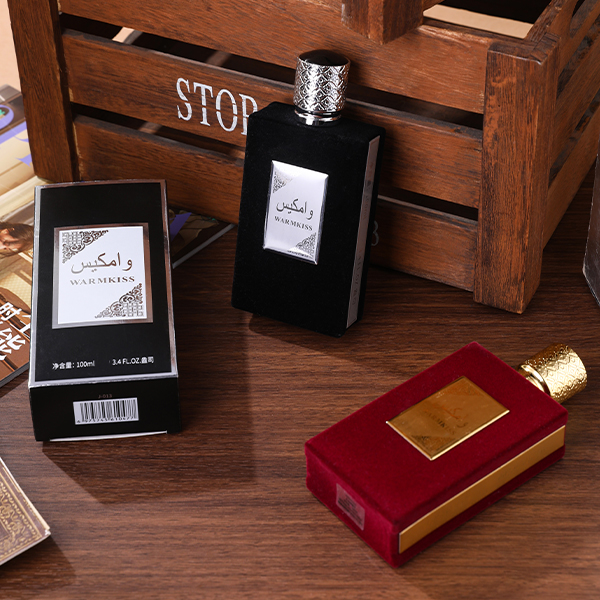
Solve the Small MOQ Problem for Overseas Buyers
How Shandong Aili Cosmetics helps small perfume buyers overcome high MOQ barriers through private label, stock scents, flexible packaging and scalable OEM/ODM solutions.
For many overseas perfume buyers, the first question is not “Can you make my perfume?” but “What is your minimum order quantity?”
This is particularly common in Africa, the Middle East and other emerging fragrance markets. Many buyers are wholesalers, retailers, social-commerce sellers or small private-label brands. They may want to start with only a few hundred bottles because they need to test consumer response before investing in a larger order.
For a traditional perfume factory, however, small orders can be difficult to handle. Custom bottles, printed boxes, new molds, fragrance development and packaging materials all involve minimum quantities and setup costs.
At Shandong Aili Cosmetics Co., Ltd., we believe the solution is not simply to reject small buyers. A better approach is to build a more flexible supply model that separates market testing, light customization and full OEM/ODM production.
Why Small MOQ Is a Real Problem for Both Buyers and Factories
A low MOQ sounds attractive to a buyer, but it can create significant manufacturing costs.
A fully customized perfume may require:
- Custom fragrance development
- Bottle or cap customization
- Printed outer boxes
- Custom labels
- Special decoration
- Packaging materials
- Production setup and quality control
For a factory, producing several hundred completely customized bottles can therefore be inefficient. For a small buyer, paying for all these setup costs can make the first order uneconomical.
The result is a familiar B2B problem:
Large buyers are difficult to find, while small buyers cannot always meet traditional factory MOQ requirements.
The answer is to create different purchasing paths instead of applying one MOQ to every customer.
Light Customization: A Practical Private Label Solution
For buyers ordering a few hundred bottles, light customization can provide a useful middle ground.
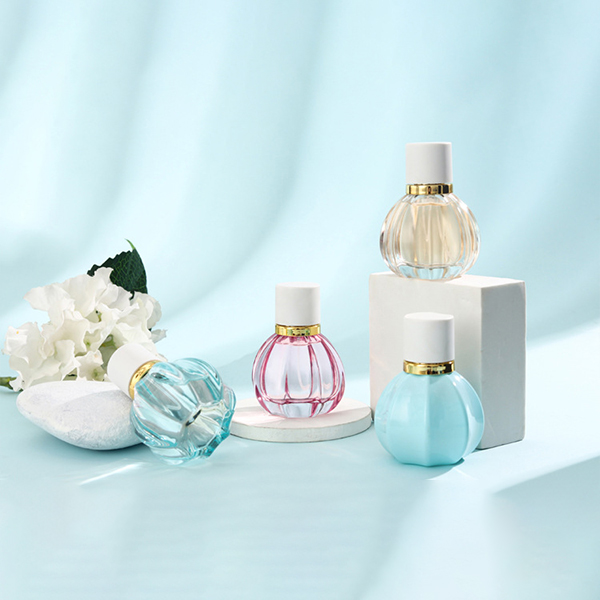
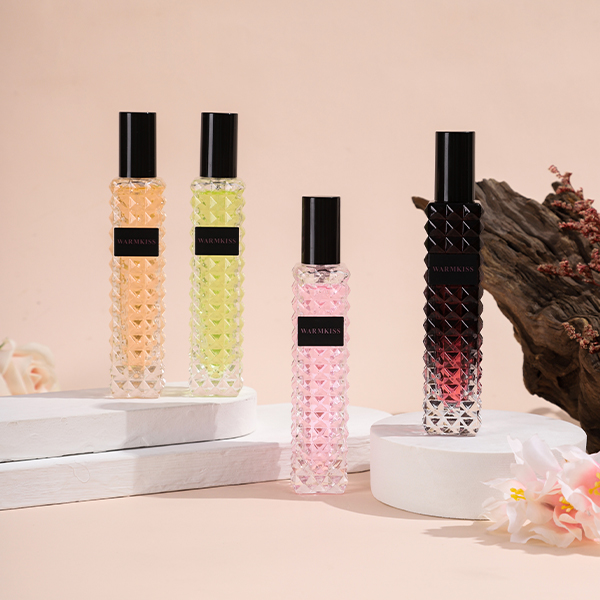
Instead of developing a completely new bottle, Aili can use selected stock bottles and standard components, while allowing customers to customize elements such as:
- Brand name
- Product label
- Fragrance selection
- Label artwork
- Basic packaging decoration
- Outer stickers or seals
This approach is particularly suitable for emerging private label perfume brands that want to establish their own identity without immediately investing in custom molds.
Stock bottles can also reduce development time because the packaging structure has already been tested.
For the buyer, the product can still look like a private-label perfume rather than a generic stock product.
Stock Scents Can Lower the Barrier to Market Testing
Fragrance development is another major source of cost and time.
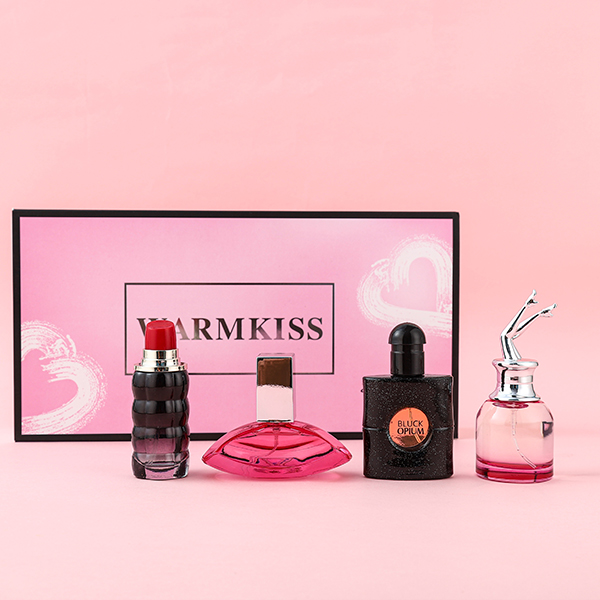
A small buyer does not necessarily need a completely original fragrance for the first order. In many cases, selecting from a professionally developed stock fragrance library is a more practical way to test the market.
Depending on the target region, popular directions may include:
| Market Need | Potential Fragrance Direction |
| Everyday women’s perfume | Floral, fruity, floral-musk |
| Men’s fragrance | Woody, aromatic, amber |
| Middle Eastern market | Oud, amber, musk, oriental accords |
| African emerging brands | Strong floral, fruity, sweet and oriental profiles |
| Premium positioning | More complex woody, floral or amber compositions |
The objective is not to make every product identical. It is to help a new buyer answer the most important commercial question first:
Will local consumers actually buy this fragrance?
If the answer is positive, the second or third order can move toward deeper customization.
A Scalable Path From 300 Bottles to Full OEM
Aili’s recommended model for smaller buyers is therefore not simply “low MOQ.”
It is scalable customization.
A typical development path can look like this:
Stage 1 — Market Testing:
Stock fragrance + stock bottle + private label → small initial order.
Stage 2 — Brand Development:
Better packaging + selected fragrance adjustments + larger repeat orders.
Stage 3 — Full Private Label:
Customized fragrance direction + customized packaging + stronger brand identity.
Stage 4 — Full OEM/ODM:
Original fragrance development + customized bottle/packaging + larger-scale production.
This model gives a small buyer room to grow without forcing the factory to treat a 300-bottle order exactly like a 10,000-bottle OEM project.
Should Small Buyers Be Rejected?
Not necessarily.
A 300-bottle buyer may not be a large customer today, but the buyer may be testing a new market, launching a new brand or building a distribution network.
The more important question for a perfume OEM manufacturer in China is whether the customer has a credible path toward repeat purchasing.
A small order can therefore be evaluated through several factors:
| Customer Factor | What the Factory Should Consider |
| Initial quantity | Is the first order genuinely a market test? |
| Product positioning | Is there a clear target consumer? |
| Sales channel | Retail, wholesale, e-commerce or social commerce? |
| Repeat potential | Can the customer scale after testing? |
| Payment ability | Can the customer operate sustainably? |
| Market knowledge | Does the buyer understand the local market? |
This is more useful than judging a customer purely by the first order quantity.
A Rebate Model Can Encourage Long-Term Growth
Another possibility is a volume-based rebate or development-credit system.
For example, a small buyer may pay a higher unit cost during the testing stage because packaging and production costs cannot yet benefit from economies of scale.
When the customer reaches an agreed cumulative purchasing volume, part of the initial development or customization charges could be credited against future orders.
The exact commercial terms need to be calculated case by case, but the principle is simple:
The factory protects its economics today while giving the customer a financial reason to grow tomorrow.
This can turn a one-time small order into a long-term private-label relationship.
How Can Chinese Perfume Factories Find Larger Buyers?
Solving the small-MOQ problem does not mean abandoning the search for larger customers.
The two strategies should operate simultaneously.
For Africa in particular, manufacturers should look beyond generic B2B inquiries and develop relationships with importers, distributors, wholesalers, buying agents and regional retail networks.
Professional trade shows can still play a role when the objective is buyer qualification rather than simply collecting business cards.
For example, Beauty West Africa positions its Lagos event around importers, distributors, retailers and wholesalers, with more than 7,000 beauty importers, distributors and decision-makers promoted for its 2025 edition.
Beautyworld Middle East is another important regional platform. Its 2025 edition attracted more than 2,500 exhibitors and over 85,000 visitors from 178 countries, demonstrating the scale of Dubai’s role as an international beauty sourcing hub.
The objective should therefore be qualified buyer development, not simply exhibition traffic.
A Strong Digital Factory Profile Matters
Large buyers also need evidence that a supplier can move beyond samples and small orders.
A professional private label perfume manufacturer should clearly demonstrate:
- Production capacity
- OEM/ODM experience
- Quality-control systems
- Packaging capabilities
- Product development resources
- Export experience
- Relevant compliance documentation
- Real manufacturing facilities
Fragrance compliance is also important. IFRA Standards provide an industry framework for the safe use of fragrance ingredients, but they are voluntary standards and do not replace national or regional legal requirements. An IFRA Certificate of Conformity is prepared by the fragrance mixture supplier for a specified intended use; IFRA itself does not issue these certificates.
For Aili, international fragrance cooperation, professional manufacturing and quality management are therefore part of the same value proposition.
How Aili Approaches Different Buyer Sizes
With more than 30 years of manufacturing experience, Aili Cosmetics serves different types of customers rather than relying on one standardized purchasing model.
Our capabilities cover perfume OEM/ODM, private label perfume, fragrance development, packaging and large-scale production. With 48 perfume production lines and production capacity exceeding 300,000 bottles per day, Aili can support customers as they move from initial market testing toward larger commercial production.
The practical approach is straightforward:
Small buyer → light customization → repeat order → deeper customization → full OEM/ODM.
At the same time, larger importers, distributors and established brands can enter directly into customized fragrance and packaging development.
Frequently Asked Questions
What can a buyer do if they cannot meet a perfume factory’s MOQ?
A buyer can consider stock fragrances, stock bottles, private-label labels and standard packaging instead of requesting full customization from the first order.
Can I order a few hundred bottles with my own perfume brand?
Depending on the product and packaging solution, light private-label customization may be possible. Stock bottles and labels are generally more flexible than custom molds and fully printed packaging.
Is stock perfume suitable for a new fragrance brand?
Yes. Stock fragrance products can be useful for testing market demand before investing in original fragrance development and customized packaging.
How can a small perfume buyer eventually move to full OEM?
A practical route is to start with market testing, analyze sales, increase repeat-order volume and gradually introduce customized fragrance, packaging and bottle development.
Why is full perfume customization difficult at low quantities?
Custom bottles, molds, printed packaging, fragrance development and production setup can all create fixed costs. These costs are difficult to spread across a few hundred bottles.
Should perfume factories accept very small African buyers?
Small buyers should not automatically be rejected. Their potential should be evaluated according to market, sales channels, payment capability, product positioning and repeat-order potential.
What should buyers look for in a Chinese perfume OEM factory?
Buyers should consider manufacturing capacity, fragrance resources, OEM/ODM experience, quality management, packaging capabilities, export experience and compliance documentation—not only unit price.

Conclusion
The small-MOQ problem is not simply a question of whether a perfume factory can produce 300 bottles.
It is a question of how the supply chain is designed around the customer’s stage of development.
For emerging African, Middle Eastern and other overseas buyers, a flexible model combining stock fragrances, stock packaging, light private labeling and scalable OEM/ODM can significantly lower the initial barrier to launching a perfume brand.
For the manufacturer, the goal is equally important: protect production efficiency while identifying customers with genuine long-term potential.
At Aili Cosmetics, we believe the best customer relationship does not always begin with a 10,000-bottle order.Sometimes it begins with 3000 bottles—and grows from there.