
Make Perfume Sampling Faster and More Efficient
Learn how Shandong Aili Cosmetics improves perfume sampling efficiency through fragrance briefs, discovery kits, structured feedback, testing protocols and professional OEM/ODM development.
For a perfume buyer, developing a new fragrance can sound simple: choose a scent, make a sample, confirm it, and start production.
In reality, perfume sampling is often one of the slowest stages of a Fragrance OEM/ODM project.
A buyer may say that a fragrance should be “fresh,” “luxurious,” “long-lasting,” or “more attractive.” The manufacturer prepares a sample, ships it internationally, and several days later receives feedback such as “not quite right” or “please make it sweeter.”
Another sample is prepared. Then another.
For a professional perfume manufacturer, this repeated cycle consumes development time, shipping costs and technical resources. For the buyer, it delays product launch.
At Shandong Aili Cosmetics Co., Ltd., we believe efficient perfume development requires more than good formulation technology. It requires a structured communication process that turns subjective fragrance preferences into clear development instructions.
Why Perfume Sampling Often Takes So Long
The fundamental problem is that fragrance is highly subjective.
Two buyers can smell exactly the same perfume and describe it differently. One may call it “fresh,” while another considers it “too sharp.” A buyer may ask for a “luxury floral perfume” without explaining whether they prefer rose, jasmine, white flowers, powdery notes or fruity-floral accords.
There are also practical complications:
- International sample shipping takes time.
- Buyers may not use the same testing method.
- Feedback is often based on memory rather than comparison.
- Target fragrance, cost and packaging requirements may change during development.
- Small modifications can require another formulation and sample cycle.
The solution is not simply to make samples faster.
The better solution is to reduce unnecessary sample rounds.
Start With a Professional Fragrance Brief
Before developing a custom fragrance, Aili recommends collecting a structured Fragrance Brief.
Instead of asking a customer to describe a fragrance in general terms, the brief should capture several specific dimensions.
| Information | Example |
| Reference fragrance | 1–2 existing perfumes the buyer likes |
| Fragrance family | Floral, woody, citrus, oriental, amber, gourmand |
| Target consumer | Women, men, unisex, young consumers, premium users |
| Market | Middle East, Africa, Europe, North America, etc. |
| Usage occasion | Daily wear, evening, formal, summer, special occasions |
| Desired performance | Fresh, moderate, strong, long-lasting |
| Target price | Target product cost or fragrance-cost range |
| Positioning | Mass market, premium, niche or luxury |
A reference product is particularly useful.
For example, instead of saying “I want something elegant and expensive,” a buyer can explain that they prefer the opening of one fragrance but the woody dry-down of another.
This gives the perfumer a much clearer starting point.
Use a Discovery Kit Instead of Sending One Sample at a Time
One of the most effective ways to reduce unnecessary communication is to replace the traditional one-sample-at-a-time approach with a Discovery Kit or Scent Matrix.
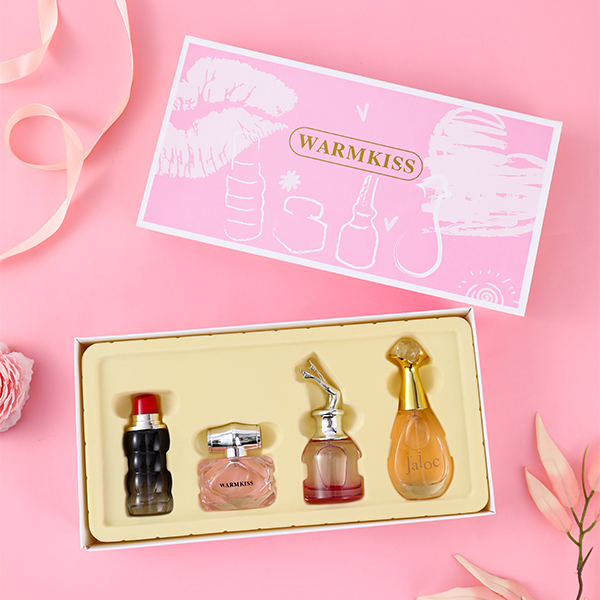
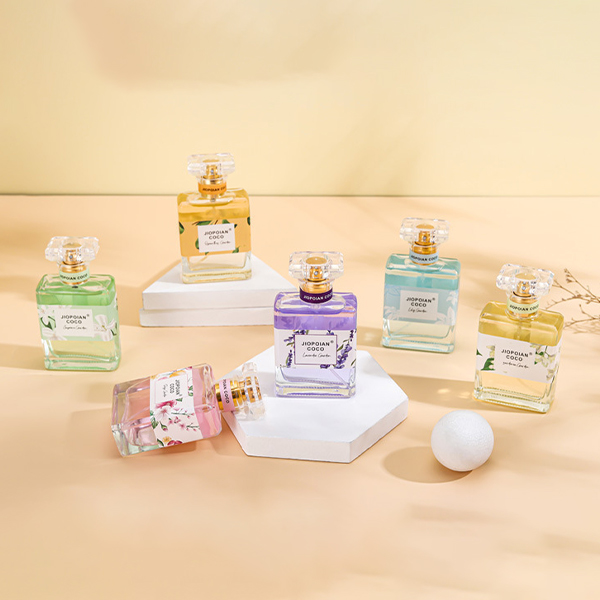
For an initial project, Aili can develop a small group of alternatives around the same fragrance brief.
For example:
Sample A: Closest interpretation of the customer’s brief.
Sample B: Same direction with a stronger or softer interpretation of one key accord.
Sample C: A commercially proven fragrance direction recommended for the target market.
Sample D: An alternative interpretation designed to test a different balance of top, heart and base notes.
This approach changes the conversation.
Instead of asking:
“Do you like it?”
the buyer can answer:
“I prefer B’s opening, but I want A’s dry-down and C’s sweetness.”
That is much more useful information for the perfumer.
It also reduces the risk of spending an entire development round on a single interpretation that the customer simply does not like.
Standardize the Way Customers Test Perfume Samples
Another overlooked problem is inconsistent sample testing.
A perfume does not smell exactly the same immediately after spraying and several hours later. Alcohol evaporation, top-note release, heart-note development and the final dry-down all influence the experience.
Therefore, Aili recommends giving customers a simple Perfume Testing Protocol with their samples.
A practical process is:
- Spray the sample onto a fragrance blotter or test strip.
- Allow the initial alcohol impact to dissipate before evaluating the fragrance.
- Evaluate the opening/top notes.
- Reassess after the fragrance has developed for around 15–30 minutes.
- Test the fragrance on skin when appropriate.
- Evaluate the dry-down and overall longevity according to the product’s intended positioning.
Customers should also avoid testing too many fragrances at once. Olfactory fatigue can make later samples difficult to distinguish.
A simple testing guide can therefore prevent a surprising amount of unnecessary feedback.
Turn Subjective Feedback Into Structured Feedback
“Make it stronger” is not sufficiently precise for a professional fragrance development process.
A better feedback form can ask customers to score specific characteristics.
| Feedback Area | Example Question |
| Opening | Is the top note too sharp, weak or balanced? |
| Sweetness | Should the fragrance be sweeter, drier or unchanged? |
| Floral character | Stronger, softer or different floral direction? |
| Woodiness | More prominent or less prominent? |
| Dry-down | Too heavy, too light or balanced? |
| Longevity | Does the performance meet the target positioning? |
| Overall | Which sample is closest to the target? |
This creates a common language between the buyer, sales team and perfumer.
The objective is not to eliminate subjective opinions. That is impossible in perfumery.
The objective is to make subjective opinions more actionable.
Control the Number of Revision Rounds
A professional custom fragrance manufacturer should also establish expectations before development begins.
Not every modification requires starting from zero.
Once the customer has selected the preferred direction, subsequent adjustments should focus on clearly identified elements—for example, increasing a floral note, reducing sweetness, strengthening the woody base or improving the balance between freshness and depth.
A development record should keep track of:
- Sample number
- Formula version
- Customer feedback
- Requested modification
- Target cost
- Development date
- Approval status
This prevents a common problem in long-distance OEM projects: the customer refers to “the second sample,” while the factory is working from a later formula version.
Version control is especially important when several fragrances are being developed simultaneously.
Use Stock Fragrances When Full Customization Is Not Necessary
Not every customer needs to develop a fragrance from zero.
For new brands, distributors and smaller buyers, a professional stock perfume or semi-custom fragrance program can significantly shorten the development cycle.
Aili can use mature fragrance directions and combine them with:
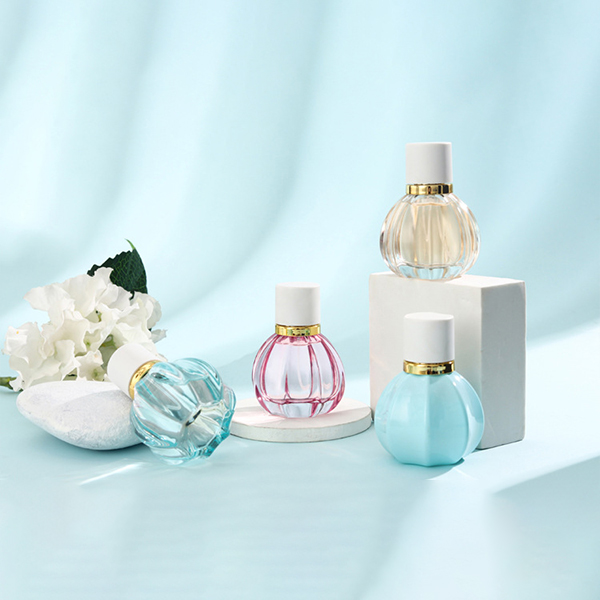
- Stock bottles
- Existing packaging structures
- Private-label labels
- Standard fragrance options
- Flexible packaging solutions
This is particularly useful for customers who want to test a market before investing in a fully customized fragrance.
Once the product demonstrates market potential, the next order can move toward deeper customization.
Make Sample Fees Part of Customer Qualification
Free samples can be useful for attracting new customers, but unlimited free development can create an inefficient sales process.
For serious custom fragrance projects, a sample or development fee can help establish commitment.
A practical commercial model is to charge a reasonable development or sample fee and allow the amount to be credited toward a qualifying bulk order.
This does not mean that every small customer is unimportant.
It means that both sides recognize that professional fragrance development requires time and technical resources.
A buyer who has a clear product plan, target market and purchasing schedule is usually easier to serve efficiently than a buyer who repeatedly requests samples without a defined project.
How Aili Combines Fragrance Resources With Manufacturing
For Aili Cosmetics, efficient perfume development is supported by our broader manufacturing capabilities.
Aili has more than 30 years of perfume manufacturing experience and works with international fragrance suppliers including Robertet, Givaudan and Symrise. Our cooperation with Robertet is particularly aligned with our emphasis on natural fragrance characteristics and premium fragrance development.
At the manufacturing level, Aili operates 48 perfume production lines with production capacity exceeding 300,000 bottles per day.
This means our role is not limited to supplying a fragrance formula.
We can connect fragrance development, perfume formulation, bottle selection, packaging, filling, quality control and large-scale OEM/ODM production within one project workflow.
For international buyers, this can reduce the communication gap between fragrance development and finished-product manufacturing.
A More Efficient Perfume Sampling Workflow
The overall process can therefore be simplified into six stages:
- Fragrance Brief
Define the target before development begins. - Reference & Market Positioning
Identify benchmark fragrances, consumers and price positioning. - Discovery Kit
Present several carefully selected fragrance directions rather than one blind attempt. - Structured Testing
Give the buyer clear instructions for evaluating top notes, development and dry-down. - Consolidated Feedback
Collect feedback in one structured document rather than scattered messages. - Formula Version Control
Record every revision until the customer formally approves the final sample.
This approach can make perfume development considerably more predictable.
Frequently Asked Questions
How can perfume buyers reduce the number of sample revisions?
The most effective approach is to provide a detailed fragrance brief, benchmark references and structured feedback before development begins.
How many perfume samples should be sent in the first round?
There is no universal number, but a small discovery set of several carefully differentiated samples is often more informative than sending one sample at a time.
Why does perfume smell different after several hours?
Perfume develops over time as volatile top notes dissipate and heart and base notes become more prominent. This is why both the opening and dry-down should be evaluated.
What information should a perfume buyer provide to an OEM factory?
Useful information includes reference fragrances, preferred fragrance families, target consumers, market, application occasion, desired performance and target product cost.
Can a buyer develop a perfume without creating a completely new fragrance?
Yes. Stock or semi-custom fragrance solutions can be suitable for market testing, especially for new brands and smaller-volume buyers.
Why should perfume samples have version numbers?
Version control prevents confusion when several revisions are exchanged. It allows the buyer and manufacturer to identify exactly which formula is being discussed or approved.
How does Aili help international buyers with perfume development?
Aili combines international fragrance resources with perfume formulation, packaging, filling, quality control and large-scale OEM/ODM manufacturing, allowing fragrance development and finished-product production to be managed within one supply chain.
Conclusion
Efficient perfume sampling is not about sending samples faster.
It is about making every sample more informative.
A clear fragrance brief reduces ambiguity. A discovery kit provides meaningful comparisons. A testing protocol improves the quality of customer feedback. Structured revision records prevent communication errors. Stock fragrances can shorten the development cycle for suitable projects, while a professional approval process keeps complex OEM/ODM development under control.
For an international buyer, this means fewer unnecessary sample shipments and clearer communication.
For Aili Cosmetics, it means spending more time developing the right fragrance—and less time repeating the same conversation.
In modern perfume OEM/ODM manufacturing, better communication is not an administrative detail. It is part of the product-development capability itself.